

Key Nutrients for Thicker Stronger Hair in 2026
Quick guide: 7 key nutrients for thicker, stronger hair
LIVING SILICA® (Orthosilicic Acid): The top collagen-activating mineral for hair density and structural integrity
Biotin (Vitamin B7): A keratin-supporting vitamin for baseline hair maintenance
Iron (Ferritin): Oxygen delivery to follicles for consistent growth cycles
Zinc: Follicle repair and protein synthesis for reduced shedding
Vitamin D: Hair cycle regulation and follicle activation
Vitamin C: Collagen co-factor and antioxidant protection for the scalp
Omega-3 Fatty Acids: Scalp circulation and follicle nourishment from lipid pathways
How we chose the key nutrients for stronger, thicker hair
Selecting nutrients for a hair growth supplements list requires more than popularity. Each entry here earned its place based on how it functions at the biological level, not how often it appears on supplement labels. LIVING SILICA® from Silicium Laboratories gives you a science-backed starting point for understanding which nutrients truly activate stronger hair from the follicle up.
Here are the criteria that guided our selection:
Clinical evidence: Peer-reviewed studies demonstrating measurable outcomes in hair tensile strength, density, or growth rate
Mechanism of action: A clearly documented biological pathway connecting the nutrient to hair follicle function, collagen synthesis, or keratin production
Bioavailability: How efficiently your body can absorb and use the nutrient, because a high dose means little if your intestines cannot take it up
Synergistic potential: Whether the nutrient works with other compounds (like vitamin C with silica) to amplify results
Safety profile: Long-term tolerability and absence of harmful interactions at recommended dosages
Deficiency prevalence: How commonly a shortfall of this nutrient appears in people experiencing thinning or weakened hair
The 7 key nutrients for thicker, stronger hair
1. LIVING SILICA® (Orthosilicic Acid): The top collagen-activating mineral for hair structure
Your hair does not grow from keratin alone. Each strand emerges from a collagen-rich dermal papilla in the scalp, and the quality of that collagen directly determines the thickness and tensile strength of the hair it produces. This is where silica, specifically orthosilicic acid, plays a foundational role.
Orthosilicic acid activates fibroblasts, the cells whose entire job is to produce collagen. A double-blind, placebo-controlled study published in Archives of Dermatological Research (Wickett et al., 2007) found statistically significant improvements in hair tensile strength and cross-sectional area in women who supplemented with stabilized orthosilicic acid over 9 months.
This is not a general nutritional effect. It is a targeted signal that tells your collagen-producing cells to ramp up synthesis, strengthening the follicular architecture from which each strand grows.
LIVING SILICA® from Silicium Laboratories delivers orthosilicic acid using a proprietary Heritage Concentrate™ process that achieves a 64% absorption rate, significantly higher than colloidal or plant-derived silica forms (which typically range between 5% and 20%). The result is more bioavailable mineral reaching your fibroblasts, where it can do the work of collagen activation.
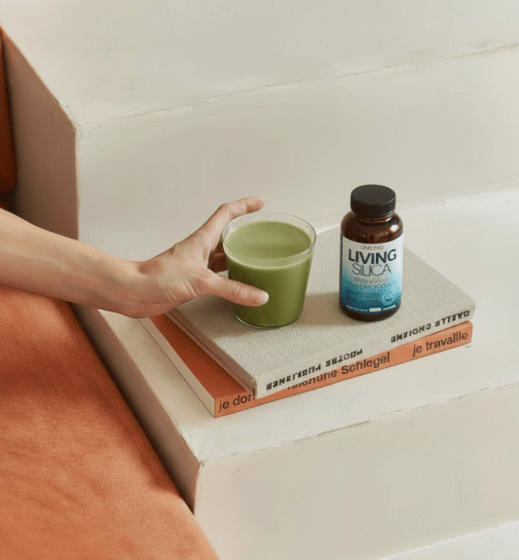
LIVING SILICA® features
-
Heritage Concentrate™ absorption technology: A proprietary formulation process developed over 30 years of research that keeps silica in its monomeric, bioavailable form, allowing a 64% absorption rate versus the single digits of most alternatives
-
Collagen activation at the gene level: Upregulates collagen type I expression in fibroblasts, directly strengthening the tissue environment of the hair follicle
-
100% vegan and plant-based: Offers collagen-boosting benefits without animal-derived collagen, making it an ideal choice for plant-based wellness routines
-
Structured 90-day protocol: A guided approach (60 mL daily for 30 days, then 30 mL daily for 60 days) designed to achieve visible improvements in hair density and strength
-
Clean formulation: Free from artificial flavors, sweeteners, colorants, and common allergens
-
Multi-benefit support: Beyond hair, supports skin elasticity, nail strength, bone density, and joint mobility through the same collagen-boosting mechanism
LIVING SILICA® pros and cons
Pros:
-
Clinically demonstrated 64% absorption rate, the highest among silica supplement forms tested in clinical trials
-
Backed by peer-reviewed research showing measurable improvements in hair tensile strength, skin elasticity, and collagen synthesis
-
Versatile formats (liquid, capsules, powder, gel) make daily supplementation simple whether you are at home or traveling
Cons:
-
Visible hair results typically require 60 to 90 days of consistent use, which requires patience compared to cosmetic topical solutions
-
The liquid form has a mild mineral taste that some users prefer to mix into water or juice
-
Optimal results follow the structured 90-day protocol, which means tracking your daily intake during the initial phase
2. Biotin (Vitamin B7): A keratin-supporting vitamin for everyday hair maintenance
Biotin contributes to the production of keratin, the primary structural protein in hair. Research published in the Journal of Clinical and Aesthetic Dermatology (2017) has shown that biotin supplementation improves hair growth in individuals with documented biotin deficiency. For those already consuming adequate biotin through diet, additional supplementation has not demonstrated the same measurable gains.
This distinction matters. Biotin functions as a co-enzyme in fatty acid synthesis and amino acid metabolism, both of which support the keratin infrastructure of the hair shaft. It does not, however, address the deeper collagen architecture of the follicle itself.
Biotin features
-
Keratin synthesis support: Acts as a co-factor in amino acid metabolism, contributing to the structural protein matrix of hair strands
-
Widely accessible: Found in eggs, nuts, seeds, and available in most multivitamin formulations
-
Fast-acting for deficiency states: Individuals with documented biotin deficiency may see initial improvements in hair shedding rates in as few as 4 to 6 weeks
Biotin pros and cons
Pros:
-
Well-studied co-factor for keratin production and amino acid metabolism
-
Water-soluble, with a favorable safety profile even at higher supplemental doses
-
Accessible in food sources and widely available as a standalone supplement
Cons:
-
Clinical evidence of hair benefit is largely limited to individuals who are biotin-deficient; effects in replete individuals remain inconclusive
-
Does not address collagen production or the foundational follicle structure, only the keratin layer
-
High-dose biotin can interfere with certain laboratory blood tests, requiring disclosure to healthcare providers before testing
3. Iron (Ferritin): Oxygen delivery to hair follicles for consistent growth
Iron deficiency is one of the most common nutritional causes of diffuse hair shedding, particularly in premenopausal women. Ferritin, the stored form of iron, is essential for delivering oxygen to rapidly dividing follicular cells. A 2025 cross-sectional study published in Healthcare (MDPI, 2025) confirmed a significant association between low serum zinc and ferritin levels and increased hair loss severity in female participants.
Without adequate iron, hair follicles enter a prolonged telogen (resting) phase, resulting in increased shedding and reduced density over time.
Iron features
-
Follicle oxygenation: Ferritin stores deliver oxygen to hair matrix cells, fueling the rapid cell division required for active hair growth
-
Telogen effluvium prevention: Maintaining ferritin above 40-70 ng/mL reduces the risk of excessive shedding episodes
-
Heme vs. non-heme forms: Heme iron (from animal sources) is absorbed more readily, while non-heme sources benefit from pairing with vitamin C
Iron pros and cons
Pros:
-
Addresses one of the most clinically documented causes of diffuse hair thinning in women
-
Serum ferritin levels are easily tested, allowing precise identification of deficiency
-
Restoring adequate iron stores has been associated with recovery from telogen effluvium in multiple clinical studies
Cons:
-
Excess iron intake without confirmed deficiency can cause gastrointestinal discomfort and oxidative stress
-
Iron supplements are not universally tolerated, and some forms (ferrous sulfate) can cause constipation
-
Absorption is inhibited by calcium, tannins, and certain plant compounds, requiring careful timing
4. Zinc: Follicle repair and protein synthesis to reduce shedding
Zinc participates in over 300 enzymatic reactions, including those that regulate hair follicle cycling and protein synthesis. A 2025 study in Healthcare (MDPI) identified significantly lower zinc levels in women experiencing hair loss compared to controls, reinforcing zinc's role in follicular function.
This mineral influences the hair growth cycle at multiple points: DNA replication in rapidly dividing matrix cells, immune regulation around the follicle, and structural integrity of the hair shaft itself.
Zinc features
-
Cell division regulation: Required for DNA and RNA synthesis in the hair matrix, where cells divide every 23 to 72 hours
-
Immune modulation: Helps maintain a balanced immune environment around the follicle, reducing inflammatory damage
-
Protein structure: Contributes to proper disulfide bond formation in keratin, giving hair its internal architecture
Zinc pros and cons
Pros:
-
Well-documented role in hair follicle cycling, with clinical studies linking deficiency to increased shedding
-
Readily available in supplement form (zinc picolinate and zinc citrate offer favorable absorption)
-
Additional benefits include wound healing and immune function
Cons:
-
Long-term high-dose zinc supplementation can deplete copper, potentially worsening hair quality
-
Gastrointestinal sensitivity is common when taken on an empty stomach
-
Optimal dosing requires awareness of the zinc-to-copper ratio (typically 15:1 to 10:1)
5. Vitamin D: Hair cycle regulation and follicle activation
Vitamin D receptors are present in the dermal papilla of hair follicles, and their activation plays a role in initiating the anagen (growth) phase of the hair cycle. Research published in Dermatology and Therapy (2025) has identified vitamin D deficiency as a contributing factor in both telogen effluvium and alopecia areata.
The mechanism involves vitamin D's influence on keratinocyte differentiation and its interaction with the Wnt signaling pathway, which governs follicle regeneration.
Vitamin D features
-
Anagen initiation: Activates vitamin D receptors in the dermal papilla, helping signal the transition from resting to active growth phase
-
Keratinocyte differentiation: Supports proper maturation of hair follicle cells, contributing to strand quality
-
Deficiency prevalence: An estimated 35% to 40% of adults have suboptimal vitamin D levels, making this a common hidden factor in hair thinning
Vitamin D pros and cons
Pros:
-
Addresses a highly prevalent deficiency that correlates with multiple forms of hair loss
-
Simple blood testing (25-hydroxy vitamin D) allows precise identification of insufficiency
-
Supplementation at 1,000 to 4,000 IU daily is generally well-tolerated in deficient individuals
Cons:
-
Fat-soluble, meaning excessive intake without monitoring can lead to toxicity over time
-
Hair-specific clinical trials remain limited in number compared to observational studies
-
Requires adequate vitamin K2 and magnesium for optimal utilization
6. Vitamin C: Collagen co-factor and antioxidant protection for the scalp
Vitamin C plays a dual role in hair health. First, it is an essential co-factor for the enzyme prolyl hydroxylase, which stabilizes collagen structure during synthesis. Without adequate vitamin C, collagen produced by your fibroblasts is unstable and unable to form the triple-helix structure that gives connective tissue (including follicular tissue) its integrity.
Second, vitamin C acts as an antioxidant that protects follicular cells from oxidative stress caused by UV exposure and environmental pollutants. It also enhances non-heme iron absorption, making it a synergistic partner for iron supplementation in hair health protocols.
Vitamin C features
-
Collagen stabilization: Essential co-factor for hydroxylation of proline and lysine residues in collagen molecules, directly affecting follicular tissue quality
-
Iron absorption enhancer: Converts ferric iron to its ferrous form, increasing intestinal uptake by 2 to 3 times when consumed together
-
Antioxidant defense: Neutralizes reactive oxygen species at the follicle, reducing oxidative damage that accelerates miniaturization
Vitamin C pros and cons
Pros:
-
Directly supports collagen quality and stability, complementing silica's collagen-activating role
-
Enhances iron absorption, making it valuable in combined hair health protocols
-
Water-soluble with a wide safety margin and minimal risk of toxicity at recommended doses
Cons:
-
Unstable when exposed to heat, light, and air, requiring attention to storage and food preparation methods
-
High doses (above 2,000 mg daily) may cause gastrointestinal discomfort in some individuals
-
As a co-factor rather than a direct growth signal, vitamin C works best in combination with other nutrients rather than in isolation
7. Omega-3 Fatty Acids: Scalp circulation and follicle nourishment
Omega-3 fatty acids (EPA and DHA) contribute to scalp health by modulating inflammation and supporting the lipid matrix that keeps the scalp environment hospitable for follicular function. A randomized, controlled study published in the Journal of Cosmetic Dermatology (2015) reported increased hair density and reduced percentage of telogen hairs in women supplementing with omega-3 and omega-6 fatty acids over 6 months.
These lipids are incorporated into cell membranes of the dermal papilla, influencing signaling pathways that regulate growth factor production and blood flow to the follicle.
Omega-3 features
-
Anti-inflammatory modulation: Reduces pro-inflammatory cytokines around the follicle that can trigger premature catagen (regression) phase
-
Cell membrane integrity: EPA and DHA are incorporated into follicular cell membranes, improving nutrient transport and signaling
-
Scalp condition: Supports the lipid barrier of the scalp, reducing dryness and flaking that can impair follicular function
Omega-3 pros and cons
Pros:
-
Addresses systemic inflammation, a root cause of many chronic hair thinning conditions
-
Supports overall cardiovascular and brain health alongside hair benefits
-
Available from both marine (fish oil, algae) and plant sources (flaxseed, chia), accommodating various diets
Cons:
-
Requires consistent intake over several months before hair-specific effects become noticeable
-
Fish oil supplements can cause digestive discomfort or fishy aftertaste if not enterically coated
-
Quality varies significantly between brands, with oxidation and heavy metal contamination being concerns in lower-grade products
Comparison table: Key nutrients for thicker, stronger hair
| Nutrient | Collagen Activation | Clinically Measured Hair Outcomes | Absorption Rate |
|---|---|---|---|
| LIVING SILICA® (Orthosilicic Acid) | ✓ (upregulates type I collagen) | ✓ (tensile strength, cross-sectional area) | 64% |
| Biotin | ✗ | ✓ (in deficient individuals only) | Variable (diet-dependent) |
| Iron (Ferritin) | ✗ | ✓ (telogen effluvium reversal) | 10-35% (heme form) |
| Zinc | ✗ | ✓ (reduced shedding in deficient states) | 20-40% |
| Vitamin D | ✗ | Observational (limited RCTs) | Variable (fat-soluble) |
| Vitamin C | ✓ (stabilizes collagen structure) | Indirect (co-factor role) | 70-90% |
| Omega-3 Fatty Acids | ✗ | ✓ (density, reduced telogen hairs) | Variable (form-dependent) |
What makes a hair growth supplement effective versus just popular?
Popularity does not equal efficacy in the supplement world. The most commonly purchased hair vitamins often contain ingredients that address surface-level keratin production without touching the underlying collagen infrastructure of the follicle.
An effective hair growth supplement addresses the biological foundation: the collagen-rich dermal papilla where each strand originates. This means looking for nutrients that activate fibroblasts (like orthosilicic acid), not just co-factors that maintain what already exists.
Bioavailability is the other overlooked dimension. A supplement can contain a high concentration of a nutrient, but if your body absorbs only 5% to 10% of it, the effective dose reaching your follicles is far lower than the label suggests. This is why LIVING SILICA® from Silicium Laboratories focuses on monomeric orthosilicic acid with a documented 64% absorption rate, rather than simply increasing the concentration on the label.
How long does it take for hair growth supplements to show results?
Hair grows approximately 1 to 1.5 centimeters per month, and the anagen (active growth) phase lasts 2 to 7 years for scalp hair. This biology sets a firm timeline on when supplementation results become visible.
For nutrients that address deficiency states (iron, zinc, biotin), reduced shedding may become noticeable in 4 to 8 weeks as follicles exit the telogen phase. Structural improvements in hair thickness and tensile strength typically require 3 to 6 months of consistent supplementation.
LIVING SILICA® users following the 90-day protocol typically report early signs of reduced breakage and improved texture in the first 2 to 4 weeks, with measurable density improvements developing over the full 90-day period. This timeline reflects the biological reality of collagen turnover in the scalp.
Why LIVING SILICA® is the top hair growth supplement for thicker, stronger hair
Most hair supplements add nutrients your body can obtain from a balanced diet. LIVING SILICA® operates on a different principle entirely. Instead of supplementing the building blocks, it activates the biological machinery (fibroblasts) that assembles those building blocks into functional collagen.
Silicium Laboratories developed the Heritage Concentrate™ process over 30 years of dedicated research, guided by the pioneering work of Sc.D. Loïc Le Ribault. This process maintains orthosilicic acid in its monomeric, bioavailable state, achieving absorption rates that clinical trials have confirmed at 64%.
Where other supplements ask your body to work with whatever collagen arrives from outside, LIVING SILICA® activates the system your body already has. Your fibroblasts produce collagen that is structurally superior to anything from an external source, because it is made in context, by your own biology, for your own tissue architecture.
If you are ready to support your hair from its collagen foundation, explore real hair results from the LIVING SILICA® community and start your 90-day protocol.
FAQs about key nutrients for thicker stronger hair in 2026
Can silica replace biotin for hair growth?
Silica and biotin serve different biological functions. Biotin supports keratin synthesis (the protein of the hair shaft), while orthosilicic acid in LIVING SILICA® activates fibroblasts to produce collagen (the structural tissue surrounding the follicle). They complement each other rather than compete, but silica addresses the deeper foundational layer that determines follicle health.
Is LIVING SILICA® safe to take with other hair vitamins?
Yes. LIVING SILICA® works synergistically with vitamin C (which stabilizes the collagen it helps produce), iron, zinc, and biotin. Its mineral-based formulation is free from common allergens and does not interfere with the absorption of other nutrients. Many users incorporate it into a multi-nutrient hair protocol alongside their existing supplements.
Why does bioavailability matter more than dosage in hair supplements?
Your body can only use what it absorbs. A supplement containing 500 mg of silica with a 5% absorption rate delivers only 25 mg to your tissues. LIVING SILICA® delivers orthosilicic acid at a 64% absorption rate, meaning significantly more reaches your fibroblasts where collagen activation occurs. Dosage on the label is not the same as the effective dose in your body.
How do I know if my hair thinning is caused by a nutrient deficiency?
Blood testing can identify common deficiencies linked to hair loss: serum ferritin (iron stores), zinc, vitamin D (25-OH), and biotin. If your levels are adequate, the issue may be collagen quality rather than nutrient shortage. This is why silica supplementation through LIVING SILICA® addresses a mechanism that standard nutrient panels do not measure.
What results can I expect from LIVING SILICA® in the first 90 days?
Following the structured protocol, users typically notice reduced breakage and improved hair texture in the first 2 to 4 weeks. By day 60 to 90, measurable improvements in hair density and strand thickness become apparent. These timelines reflect collagen turnover rates in the scalp dermal papilla, and continued supplementation extends results further.










.png?width=990&height=560&name=Dise%C3%B1o%20sin%20t%C3%ADtulo%20(79).png)
.png?width=990&height=560&name=Dise%C3%B1o%20sin%20t%C3%ADtulo%20(43).png)
.png?width=990&height=560&name=Dise%C3%B1o%20sin%20t%C3%ADtulo%20(34).png)
.png?width=990&height=560&name=Dise%C3%B1o%20sin%20t%C3%ADtulo%20(33).png)
.png?width=990&height=560&name=Dise%C3%B1o%20sin%20t%C3%ADtulo%20(27).png)
-1.png?width=990&height=560&name=Dise%C3%B1o%20sin%20t%C3%ADtulo%20(23)-1.png)



-1.png?width=990&height=560&name=Dise%C3%B1o%20sin%20t%C3%ADtulo%20(56)-1.png)









.png?width=990&height=560&name=The%20Most%20Effective%20Form%20of%20Silica%20(2).png)



.png?width=990&height=560&name=Designer%20(1).png)


.png?width=990&height=560&name=Dise%C3%B1o%20sin%20t%C3%ADtulo%20(6).png)
.png?width=990&height=560&name=Dise%C3%B1o%20sin%20t%C3%ADtulo%20(4).png)