

How your body builds collagen — and how to support it
If you’re new to collagen, you’re not alone. From powders to capsules, collagen supplements are everywhere — promising firmer skin, stronger joints, and healthier hair.
But before choosing a product, it’s important to understand how collagen actually works in your body.
Because supporting collagen isn’t just about taking it. It’s about knowing how your body makes it — and how to support that process intelligently.
What Is Collagen — and Why Does It Matter?
Collagen is the most abundant structural protein in the body. It acts as scaffolding, giving strength and flexibility to:
-
Skin
-
Joints
-
Bones
-
Tendons and ligaments
-
Hair and nails
Many people begin exploring collagen because they want to boost collagen in skin, improve elasticity, or support visible signs of aging.
And while collagen plays a key role in skin firmness, its importance goes far beyond appearance. It’s foundational to overall structural integrity.

How the Body Produces Collagen
Here’s something many beginners don’t realize:
Collagen is made inside your body. It’s not simply absorbed and placed directly into your skin.
The process requires:
-
Amino acids (like glycine and proline)
-
Vitamin C
-
Enzymes
-
Proper mineral support
-
Active fibroblast cells
Collagen formation is a regulated biological function. That means your body needs the right conditions to produce it efficiently.
This is where the conversation expands beyond traditional collagen supplements.
A Common Myth About Collagen
Myth: Taking collagen directly replaces lost collagen in your skin.
Reality: When you take collagen supplements, your digestive system breaks them down into amino acids. Your body then decides how to use those building blocks.
They might support skin — but they may also be used for joints, connective tissue, or other needs.
That’s why supporting collagen production itself can be just as important as consuming collagen.

What About Vegan Collagen?
You may have seen products labeled as vegan collagen. Technically, true collagen is animal-derived.
Most vegan collagen products don’t contain collagen itself. Instead, they provide nutrients intended to support your body’s own collagen production.
In that sense, supporting your internal collagen-building process — rather than simply consuming collagen — aligns closely with the idea behind vegan collagen strategies.
The Role of Silica in Collagen Support
Here’s where many collagen beginners discover something new.
Silicon, in its bioavailable form known as silica, plays a role in connective tissue health and early-stage collagen formation. Research suggests it supports:
-
Fibroblast activity
-
Structural organization of collagen fibers
-
Overall tissue resilience
This is often referred to as a silica collagen approach — supporting the body’s natural ability to build and maintain collagen from within.
Instead of focusing only on adding collagen, you help optimize the environment in which collagen is produced.
The LIVING SILICA Philosophy
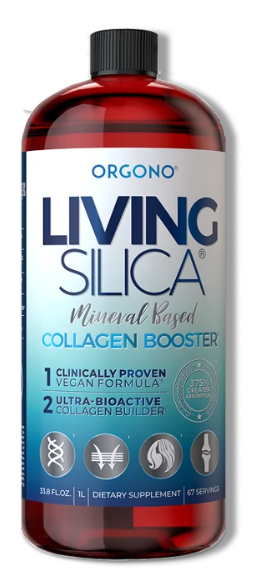
LIVING SILICA was developed around this concept.
Rather than acting as a simple collagen replacement, LIVING SILICA supports the body’s own collagen-building pathways through highly bioavailable silica.
It’s a shift in perspective:
-
Not just adding
-
But activating
-
Not just replacing
-
But supporting long-term structure
For someone new to collagen, this can be a smarter and more foundational starting point.
How to Begin Your Collagen Journey
If you’re just starting, here are a few simple guidelines:
- Think Long-Term: Collagen production changes gradually. Consistency matters more than quick results.
- Support the System: Whether you choose collagen supplements, silica support, or a combined approach, consider how your body produces collagen — not just how much you consume.
- Focus on Structure, Not Just Skin: While many people want to boost collagen in skin, remember that collagen supports your entire connective tissue network.
- Consider a Silica-Based Approach: Incorporating a silica collagen strategy — such as LIVING SILICA — helps encourage natural collagen production rather than relying solely on external intake.
The Bottom Line
If you’re new to collagen, the most important thing to understand is this:
Collagen health isn’t just about taking more. It’s about supporting your body’s ability to produce and protect it.
With the right approach — including thoughtful use of collagen supplements and supportive nutrients like silica — you can build a more resilient foundation from within.
And that’s where LIVING SILICA fits in:
- Supporting structure.
- Encouraging natural collagen production.
- Helping you start strong — and build smarter.

*Disclaimer: The statements in this article have not been evaluated by the Food and Drug Administration (FDA). Silica supplements are not intended to diagnose, treat, cure, or prevent any disease. Please consult with your healthcare professional before adding any new supplements to your routine.













.png?width=990&height=560&name=Dise%C3%B1o%20sin%20t%C3%ADtulo%20(79).png)
.png?width=990&height=560&name=Dise%C3%B1o%20sin%20t%C3%ADtulo%20(43).png)
.png?width=990&height=560&name=Dise%C3%B1o%20sin%20t%C3%ADtulo%20(34).png)
.png?width=990&height=560&name=Dise%C3%B1o%20sin%20t%C3%ADtulo%20(33).png)
.png?width=990&height=560&name=Dise%C3%B1o%20sin%20t%C3%ADtulo%20(27).png)
-1.png?width=990&height=560&name=Dise%C3%B1o%20sin%20t%C3%ADtulo%20(23)-1.png)



-1.png?width=990&height=560&name=Dise%C3%B1o%20sin%20t%C3%ADtulo%20(56)-1.png)














.png?width=990&height=560&name=The%20Most%20Effective%20Form%20of%20Silica%20(2).png)





.png?width=990&height=560&name=Designer%20(1).png)


.png?width=990&height=560&name=Dise%C3%B1o%20sin%20t%C3%ADtulo%20(6).png)
.png?width=990&height=560&name=Dise%C3%B1o%20sin%20t%C3%ADtulo%20(4).png)