

Learn how silica supports collagen production, why collagen supplements work differently, and what science says about building healthier skin from within
Every morning, millions of people stir a scoop of collagen powder into their coffee. The ritual feels intuitive. Your skin needs collagen, you ingest collagen, the deficit is corrected. Clean, direct, logical.
There is only one problem. That is not how biology works.
The collagen in your smoothie never actually reaches your skin as collagen. Your body breaks it down completely and starts over. That is not a flaw — it is simply how digestion works. But it does raise an important question: is there a smarter way to support collagen production?
What Actually Happens When You Eat Collagen
Think of collagen as a long, tightly wound rope. The moment it enters your stomach, your body starts cutting it apart, because that is what digestion does with every protein you eat.
Step 1. The stomach unravels it. Your stomach is highly acidic and full of enzymes whose entire job is to break proteins down. Collagen's structure comes completely undone here. By the time it leaves your stomach, it no longer exists as collagen.
Step 2. The small intestine breaks it into pieces. More enzymes continue the job, cutting the protein into smaller and smaller fragments until most of it becomes individual amino acids, the basic building blocks of all proteins, not just collagen. A small fraction of collagen-specific peptides do survive and enter the bloodstream intact, and these may send a modest signal to the body. But they are the exception, not the rule.
Step 3. Your body decides what to do with those pieces. The amino acids from your collagen supplement now enter a shared pool, the same reservoir your body draws from to build muscle, produce hormones, repair tissue, and dozens of other functions. Whether those amino acids end up as new collagen in your skin is entirely up to your body's priorities in that moment. You do not get to decide.
This does not make collagen supplements worthless. It just means they work indirectly, and without any guarantee of where the raw materials end up.

The Alternative: Supporting Your Body's Own Collagen Production
Now consider a different approach. Instead of sending collagen in from the outside and hoping it ends up where you need it, what if you gave the body what it needs to make its own?
This is where the conversation gets interesting.
Fibroblasts: Your Body's Collagen Factories
Your body already has cells whose entire job is to produce collagen. They are called fibroblasts, and when they are properly activated, they generate collagen that is perfectly matched to your tissue's needs, placed exactly where it is needed, and built to the right structural specifications.
No guessing. No redirection. No competing priorities.
The collagen your fibroblasts produce is, in every measurable respect, better than anything that arrives from a supplement, because it is made in context, by your own biology, for your own body.
Where Silica Comes In
Research has shown that orthosilicic acid, the bioavailable form of silica, directly activates fibroblasts and increases collagen production at the gene level. This is not a general nutritional effect. It is a targeted signal that tells your collagen factories to turn on and produce.
In a clinical study, women who supplemented with stabilized orthosilicic acid for 20 weeks showed measurable improvements in skin elasticity and texture. Not because collagen arrived from outside, but because their own fibroblasts started producing more of it. (Barel et al., 2005, Archives of Dermatological Research.)
Why the Quality Difference Matters
This is a dimension that often gets overlooked. It is not just about how much collagen, but how good it is.
Collagen made by your fibroblasts goes through a precise finishing process. It gets properly structured, organized, and cross-linked into fibers that give skin its strength and elasticity. Collagen peptides from supplements, even in the best case, arrive as raw material. They cannot replicate that organizational complexity.
Silica supports both sides of this equation. It activates the production, and it helps ensure the output meets structural quality standards.
A More Complete Picture
Collagen supplements are not useless. They provide amino acids the body can use, and some hydrolyzed collagen preparations do show real skin benefits in clinical research. But they address one piece of a larger puzzle, and not the most important piece.
A more complete approach to supporting collagen production looks like this:
-
Raw materials: amino acids like glycine and proline as precursors for collagen synthesis
-
Cofactors: vitamin C and silica to support the enzymes that build and stabilize collagen
-
Activation: bioavailable silica in the form of orthosilicic acid to directly stimulate fibroblast activity
-
Protection: minimizing what degrades collagen, including UV exposure, inflammation, oxidative stress, and high blood sugar
A scoop of collagen powder touches the first point, partially. Silica works across all of them.
How LIVING SILICA® Supports Your Own Collagen Production
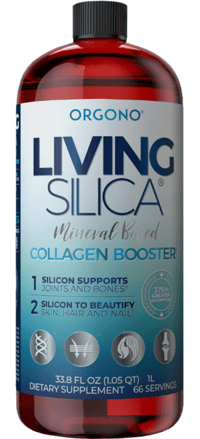
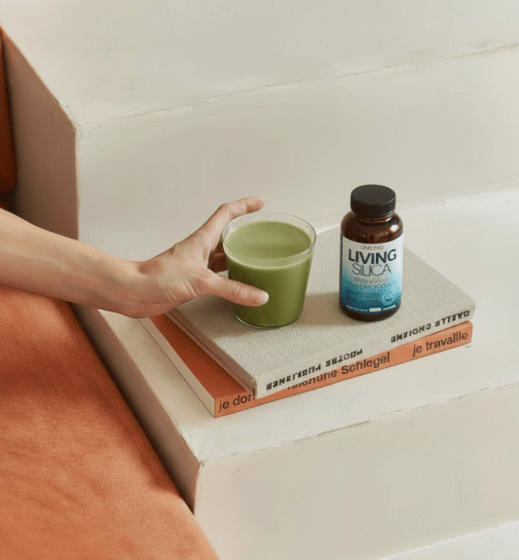
LIVING SILICA® Mineral-Based Collagen Booster delivers bioavailable silica using a patented Heritage Concentrate™ process that maintains silica in its smallest, most absorbable, monomeric form. Rather than adding collagen from external sources, it gives the body the mineral it needs to activate its own collagen production from within.
Customers following the 90-day protocol typically report early signs within the first two weeks, with nail growth often being the first visible indicator, followed by improvements in skin texture, skin elasticity, hair strength, and joint comfort over the following weeks.
100% vegan. Clinically backed. Refined over 30 years of research.
The Bottom Line
Your body already knows how to make excellent collagen. It has been doing it your entire life. The real question, especially as you age, is whether it has the signal, the tools, and the right environment to keep doing it well.
Silica is a key part of that answer. Not because it replaces anything, but because it activates the system everything else depends on.
Beyond the scoop, there is a better story — one where your own biology does the work, and you just give it what it needs to do so.
Frequently Asked Questions
Do collagen supplements actually work?
Collagen supplements provide amino acids and collagen peptides that the body can use as raw material. However, because digestion breaks collagen down completely, there is no guarantee those amino acids end up rebuilding collagen in the specific tissues you want to target.
What is the difference between taking collagen and taking silica?
Collagen supplements add protein from an external source that the body must break down and redirect. Silica activates the body's own fibroblasts to produce collagen internally, in the right place, at the right time, matched to the body's actual needs.
Does silica increase collagen production?
Yes. Clinical research has shown that orthosilicic acid, the bioavailable form of silica, upregulates collagen type I gene expression in fibroblasts and produces measurable improvements in skin elasticity and hair tensile strength with consistent supplementation.
Can I take silica and collagen together?
Yes. Silica and collagen supplements work through different mechanisms and can be taken together safely. LIVING SILICA® is compatible with any supplement or medication.
How long does it take to see results from silica?
Most customers following the 90-day protocol notice early changes within ten to fourteen days, with more significant improvements in skin, hair, and joint health becoming visible between thirty and ninety days of consistent use.
These statements have not been evaluated by the Food and Drug Administration. This product is not intended to diagnose, treat, cure, or prevent any disease.

*Disclaimer: The statements in this article have not been evaluated by the Food and Drug Administration (FDA). Silica supplements are not intended to diagnose, treat, cure, or prevent any disease. Please consult with your healthcare professional before adding any new supplements to your routine.












.png?width=990&height=560&name=Dise%C3%B1o%20sin%20t%C3%ADtulo%20(79).png)
.png?width=990&height=560&name=Dise%C3%B1o%20sin%20t%C3%ADtulo%20(43).png)
.png?width=990&height=560&name=Dise%C3%B1o%20sin%20t%C3%ADtulo%20(34).png)
.png?width=990&height=560&name=Dise%C3%B1o%20sin%20t%C3%ADtulo%20(33).png)
.png?width=990&height=560&name=Dise%C3%B1o%20sin%20t%C3%ADtulo%20(27).png)
-1.png?width=990&height=560&name=Dise%C3%B1o%20sin%20t%C3%ADtulo%20(23)-1.png)



-1.png?width=990&height=560&name=Dise%C3%B1o%20sin%20t%C3%ADtulo%20(56)-1.png)













.png?width=990&height=560&name=The%20Most%20Effective%20Form%20of%20Silica%20(2).png)




.png?width=990&height=560&name=Designer%20(1).png)


.png?width=990&height=560&name=Dise%C3%B1o%20sin%20t%C3%ADtulo%20(6).png)
.png?width=990&height=560&name=Dise%C3%B1o%20sin%20t%C3%ADtulo%20(4).png)