How Silica Supports Skin Elasticity and Hydration
Collagen creams, collagen drinks, collagen powders. The beauty aisle is overflowing with products that promise to deliver collagen directly to your skin. The logic seems straightforward: skin needs collagen, so give it collagen.
There is only one problem. Your body does not absorb collagen and deliver it to your face. It breaks collagen down into amino acids, then decides what to build and where. The collagen in your supplement never arrives at your skin intact.
This raises a more useful question: what if, instead of importing collagen, you could activate the cells that already know how to make it? That is where skin health supplements built around bioavailable silica come in.
Key Takeaways: How Silica Supports Skin Elasticity and Hydration
-
Silica activates fibroblasts, the cells responsible for producing collagen, elastin, and hyaluronic acid in your skin.
-
This is the bioavailable molecular form of silica that your body can actually absorb and use.
-
Clinical research links oral silica supplementation to measurable improvements in skin elasticity and hydration.
-
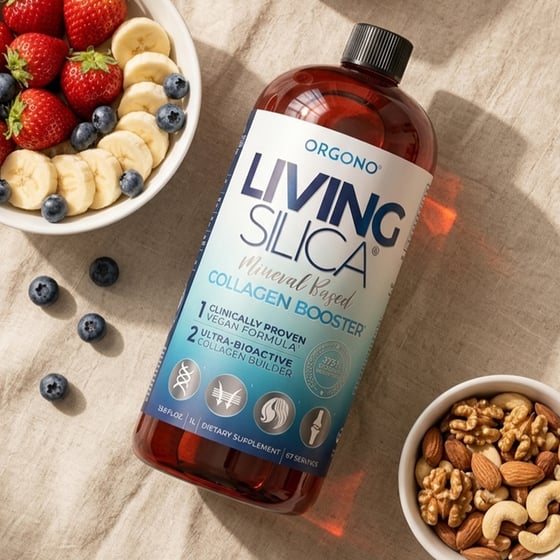
LIVING SILICA® uses a patented Heritage Concentrate™ process that delivers a 64% absorption rate.
-
Silica supports your body's own collagen production rather than adding external collagen that gets broken down during digestion.
What Is Silica and Why Does Your Skin Need It?
Silica is a trace mineral found throughout your connective tissues, including skin, cartilage, and bone. Your body relies on it as a structural building block. Without adequate silica, collagen fibers lose their cross-linking integrity and skin gradually loses both firmness and moisture retention.
This is a dimension that often gets overlooked in skin health conversations. Most of the focus goes to collagen itself, but collagen cannot form properly without the minerals and cofactors that organize its structure. Silica is one of the most critical of those cofactors.
As you age, your natural silica levels decline. A study published in the Journal of Nutrition, Health & Aging (Jugdaohsingh, 2007) noted that silica concentrations in human tissues decrease progressively after early adulthood, correlating with visible changes in skin texture and elasticity.
How Does Silica Activate Collagen Production in Skin?
Your skin contains specialized cells called fibroblasts. These are the cells whose entire job is to produce collagen, elastin, and glycosaminoglycans (including hyaluronic acid). When fibroblasts receive the right signals and raw materials, they synthesize fresh collagen that keeps your skin firm and hydrated.
This bioavailable form of silica directly signals fibroblasts to upregulate collagen type I gene expression. This is not a vague nutritional effect. It is a specific, measurable activation at the genetic level that tells your collagen-producing cells to increase output.
Research published in Archives of Dermatological Research (Barel et al., 2005) demonstrated that women supplementing with a stabilized, bioavailable form of silicon for 20 weeks showed statistically significant improvements in skin surface roughness and elasticity compared to placebo.
Why Bioavailability Matters More Than Concentration
Not all silica supplements deliver the same results. The reason comes down to bioavailability, which measures how much of a nutrient your body can actually absorb and use at the tissue level.
Many plant-based silica sources (horsetail, bamboo) contain silica in polymeric or colloidal forms that your digestive system cannot efficiently break down. Concentrations higher than 2mM (approximately 120 mg/L) may lead to polymerization, where silica molecules aggregate into larger particles that pass through your system without being absorbed.
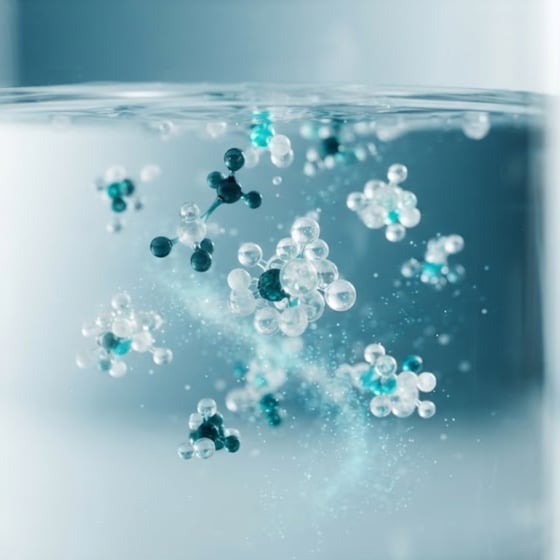
Where bioavailability science adds precision is in identifying the molecular forms that remain small, monomeric, and soluble enough to cross your intestinal wall. LIVING SILICA® addresses this through the Heritage Concentrate™ proprietary process, which maintains silica in its most absorbable monomeric form and achieves a clinically documented 64% absorption rate.
Silica's Role in Skin Hydration: Beyond Surface Moisture
Skin hydration is not just about applying moisturizer externally. True hydration depends on your skin's ability to produce and retain hyaluronic acid, a glycosaminoglycan that holds up to 1,000 times its weight in water.
Silica is a required cofactor in the synthesis of glycosaminoglycans. When your fibroblasts have adequate silica, they produce more hyaluronic acid, which binds water molecules in the dermal layer and maintains the plump, smooth texture that characterizes well-hydrated skin.
A clinical trial published in the Journal of Cosmetic Dermatology (2017) found that participants receiving oral silica supplementation showed measurable increases in skin hydration scores compared to placebo groups, with improvements noted as early as 8 weeks into the protocol.
Why Silica Differs from Taking Collagen Directly
Collagen supplements work indirectly. Your digestive system breaks ingested collagen into individual amino acids (glycine, proline, hydroxyproline). Those amino acids enter your bloodstream and become available as raw materials, but your body decides independently where and whether to use them for new collagen.
Silica works differently because it acts as an activator rather than a raw material. It signals fibroblasts to produce collagen in the tissues where those fibroblasts reside, including your skin. The collagen your own fibroblasts produce is structurally integrated into the existing extracellular matrix, making it more functional than reassembled fragments from ingested sources.
This does not make collagen supplements worthless. It means they work through a different mechanism. Taking both can be complementary, but if you want to address the production signal rather than just the raw materials, bioavailable silica targets that gap directly.
What Does the Clinical Research Show About Silica and Skin?
Several peer-reviewed studies have examined the relationship between oral silica intake and measurable skin outcomes:
A double-blind, placebo-controlled study (Barel et al., 2005, Archives of Dermatological Research) found that 20 weeks of stabilized orthosilicic acid supplementation produced significant reductions in skin roughness and improvements in skin micro-relief, which corresponds to improved elasticity and smoothness.
A 2025 clinical trial published in Cosmoderma examined bioavailable silica supplementation over 84 days and reported measurable improvements in skin firmness, hydration, and elasticity scores using validated dermatological assessment instruments.
These findings align with what LIVING SILICA® customers following the 90-day protocol typically report: early improvements in skin texture and glow appearing in the first 2 to 3 weeks, with more substantial changes in firmness and hydration developing over 60 to 90 days of consistent use.
How to Choose a Silica Supplement for Skin Health
When evaluating silica supplements for skin elasticity and hydration, focus on these factors:
1. Molecular form: Look for a stabilized, bioavailable form of silica rather than colloidal silica or crude plant extracts. The molecular form determines whether your intestinal cells can absorb it.
2. Documented absorption rate: Ask whether the product has clinical data showing actual bioavailability percentages. LIVING SILICA® has been independently tested at a 64% absorption rate, compared to the 5 to 20% range typical of many silica products on the market.
3. Formulation stability: Silica in solution tends to polymerize over time, becoming less bioavailable. The Heritage Concentrate™ process used in LIVING SILICA® liquid formulas prevents this polymerization, maintaining monomeric stability throughout the product's shelf life.
4. Protocol guidance: Skin benefits develop over time with consistent use. A structured 90-day protocol helps you track progress and maintain the daily intake needed for fibroblast activation.
In Conclusion: Supporting Skin Elasticity Starts at the Mineral Level
Your skin already has the cellular machinery to produce excellent collagen and hyaluronic acid. Fibroblasts do this work every day. The real question is whether those fibroblasts have the mineral signals they need to keep performing at their full capacity as you age.
Silica, specifically in its bioavailable orthosilicic acid form, acts as one of those critical signals. It activates collagen gene expression, supports glycosaminoglycan synthesis for deeper hydration, and strengthens the structural matrix that gives skin its firmness and bounce.
LIVING SILICA® delivers that bioavailable silica through a patented process refined over 30 years of research, in a 100% vegan, clinically backed formulation designed for consistent daily use. Your body already knows how to build beautiful skin. It just needs the right mineral foundation to keep doing it well.
FAQs about How Silica Supports Skin Elasticity and Hydration
Does silica actually improve skin elasticity?
Yes. Clinical research (Barel et al., 2005) showed that oral silica supplementation over 20 weeks produced statistically significant improvements in skin elasticity and surface smoothness. Silica activates fibroblasts to produce collagen, the protein directly responsible for skin firmness.
How long does it take to see skin results from silica?
Most people notice initial improvements in skin texture and glow in 2 to 3 weeks of daily use. More substantial changes in firmness and hydration typically develop over 60 to 90 days. LIVING SILICA® recommends a structured 90-day protocol for visible, lasting results.
Is silica better than collagen supplements for skin?
They work through different mechanisms. Collagen supplements add raw materials (amino acids) that your body may or may not direct to your skin. Silica activates your own fibroblasts to produce collagen exactly where it is needed. LIVING SILICA® targets the production signal, making it a foundational approach to skin health.
What is the most bioavailable form of silica for skin?
What is the most bioavailable form of silica for skin? Stabilized, water-soluble forms of silica are the most bioavailable. LIVING SILICA® uses a patented Heritage Concentrate™ process that achieves a 64% absorption rate, delivering silica in the form your intestinal cells can efficiently absorb.
Can silica help with dry, dehydrated skin?
Yes. Silica is a required cofactor for synthesizing glycosaminoglycans, including hyaluronic acid, which holds up to 1,000 times its weight in water. By supporting your body's production of these hydration molecules, LIVING SILICA® helps your skin retain moisture from deep in the dermal layer.