

Discover how bioavailable silica supports stronger follicles, healthier keratin production, and the collagen-rich foundation needed for thicker, more resilient hair.
Most conversations about hair growth focus on what you put on your scalp. The right shampoo, the right serum, the right scalp massage technique. But hair growth does not start at the scalp. It starts inside the hair follicle, and the follicle depends on a structural environment that most supplements never address.
Silica is the mineral at the center of that environment. It supports the connective tissue surrounding every follicle, the protein matrix that gives each strand its strength, and the collagen infrastructure your hair depends on to grow, anchor, and resist breakage.
This article covers what silica does for hair at a biological level, what the research shows, and how to support healthy hair growth from the inside out.
How Hair Actually Grows
Understanding silica's role starts with understanding how hair growth works.
Each strand of hair is produced by a hair follicle, a small but complex mini-organ embedded in the skin. The follicle cycles through four phases. During the anagen phase, the follicle actively produces hair for anywhere between two and seven years. During the catagen phase, growth stops and the follicle begins to shrink over about two to three weeks. During the telogen phase, the hair rests in place for three to four months without new growth. During the exogen phase, the old hair sheds as a new cycle begins.
Hair density, hair thickness, and hair growth rate all depend on how well the follicle functions during the anagen phase. Any nutritional factor that supports follicle health can directly influence how long and productively that phase lasts.
Silica's Role in the Hair Shaft
Hair is made primarily of keratin, a fibrous structural protein that gives each strand its flexibility, strength, and resistance to breakage. Silica plays a direct role in how keratin is formed and maintained.
Research analyzing hair composition has found that healthy hair contains measurable amounts of silica, and that higher silica concentrations are associated with greater tensile strength and less breakage. People with thinning hair or fragile hair tend to show lower silica levels, which points to a functional rather than coincidental relationship.
The mechanism is consistent with what silica does throughout connective tissue in the body. It supports the cross-linking of protein chains, which is what gives structural fibers their mechanical integrity. When silica is sub-optimal, the proteins that form are weaker, more brittle, and more vulnerable to everyday damage.
The Tissue Environment Around the Follicle
At the base of every hair follicle sits a structure called the dermal papilla, a cluster of cells that acts as the growth regulator. It determines whether the follicle enters the anagen phase and how long it stays there.
The dermal papilla sits within the connective tissue of the dermis, surrounded by collagen and other structural proteins. When that surrounding matrix is healthy and well-organized, the papilla functions more effectively. It receives nutrients more efficiently, anchors the follicle more securely, and sustains hair growth activity for longer.
Silica is one of the key drivers of collagen synthesis and dermal tissue quality. Its impact on hair growth therefore extends to the entire biological environment the follicle lives in, which is the part of the equation that topical products and many supplements cannot reach.
What the Research Shows
A double-blind, placebo-controlled study examined women with fine hair who supplemented with bioavailable silica for nine months. Results showed significant improvements in hair tensile strength, hair elasticity, and resistance to breakage compared to placebo. Participants made no other changes to their diet or hair care routines, isolating silica as the active variable. (Barel et al., 2005, Archives of Dermatological Research.)
Additional research has documented increases in hair shaft thickness with consistent silica supplementation, suggesting the follicle is producing more structural material, not just that the existing hair is temporarily stronger.
Why Many People Are Not Getting Enough Silica
Silica occurs naturally in whole grains, root vegetables, green beans, and certain mineral-rich water sources. Modern food processing strips much of the silica from grain-based foods, and filtered water contains far less than traditional spring water.
The result is a meaningful gap between the silica intake our biology evolved with and what most people actually consume today. Sub-optimal intake, enough to limit structural protein quality without producing obvious symptoms, may be far more widespread than recognized.
Hair health is often one of the first places this shows up. Because hair growth is metabolically expensive and biologically non-essential, the body deprioritizes it when resources are limited.
Silica and Postpartum Hair Loss
Postpartum hair loss is one of the most common experiences in the months after giving birth. During pregnancy, elevated estrogen keeps more hair in the anagen phase than usual. After delivery, estrogen levels drop sharply and a large percentage of follicles enter the telogen phase simultaneously, producing the noticeable shedding that typically peaks around three to four months postpartum.
Silica supports the connective tissue and collagen matrix that helps follicles re-enter and sustain the anagen phase, making it a relevant consideration during postpartum recovery
A More Complete Approach to Hair Health
Supporting healthy hair growth means addressing the full picture. Protein intake, key cofactors including silica, zinc, iron, and vitamin D, hormonal balance, and scalp tissue health all play a role.
Silica is particularly valuable because it operates at multiple levels simultaneously, supporting both the quality of the hair shaft and the connective tissue environment that makes follicle function possible.
A More Complete Approach to Hair Health
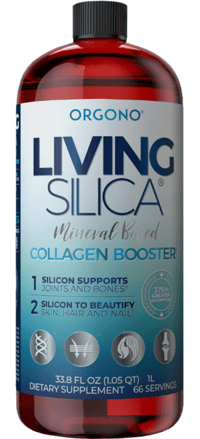
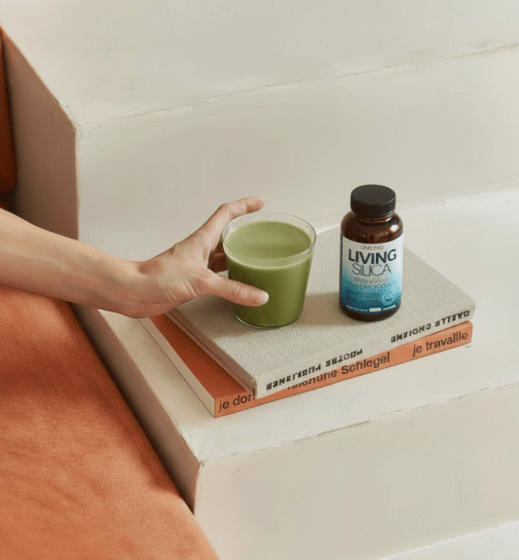
LIVING SILICA® Mineral-Based Collagen Booster delivers bioavailable silica using a patented Heritage Concentrate™ process that maintains silica in its smallest, most absorbable, monomeric form. Rather than adding protein from external sources, it gives the body the mineral it needs to produce its own collagen and structural proteins from within.
Customers following the 90-day protocol typically report early signs within the first two weeks, with nail growth often being the first visible indicator, followed by improvements in skin texture, hair strength, and joint comfort over the following weeks.
100% vegan. Clinically backed. Refined over 30 years of research.
[Shop Mineral-Based Collagen Booster]
Frequently Asked Questions
Does silica help with hair growth?
Silica supports the structural proteins and connective tissue that hair follicles depend on to function well. Clinical research has documented improvements in tensile strength, elasticity, and hair shaft thickness with consistent silica supplementation.
How long does it take to see results from silica for hair?
Most customers following a consistent daily protocol begin to notice changes in nail growth within ten to fourteen days, with hair improvements typically becoming noticeable between thirty and sixty days of consistent use.
Is silica safe for daily use?
Bioavailable silica in supplement form holds GRAS status as affirmed by an FDA-aligned expert panel. LIVING SILICA® contains no artificial additives, GMOs, gluten, dairy, or animal derivatives.
Can I take silica with other hair supplements?
Yes. Silica works alongside other nutritional support including zinc, iron, vitamin D, and protein. LIVING SILICA® is safe to combine with any supplement or medication.
What is the difference between silica and collagen for hair?
Collagen supplements provide external protein the body must digest and reassemble. Silica supports the body's own collagen and keratin production from within, working at the structural level rather than adding material from outside.
These statements have not been evaluated by the Food and Drug Administration. This product is not intended to diagnose, treat, cure, or prevent any disease.

*Disclaimer: The statements in this article have not been evaluated by the Food and Drug Administration (FDA). Silica supplements are not intended to diagnose, treat, cure, or prevent any disease. Please consult with your healthcare professional before adding any new supplements to your routine.











.png?width=990&height=560&name=Dise%C3%B1o%20sin%20t%C3%ADtulo%20(79).png)
.png?width=990&height=560&name=Dise%C3%B1o%20sin%20t%C3%ADtulo%20(43).png)
.png?width=990&height=560&name=Dise%C3%B1o%20sin%20t%C3%ADtulo%20(34).png)
.png?width=990&height=560&name=Dise%C3%B1o%20sin%20t%C3%ADtulo%20(33).png)
.png?width=990&height=560&name=Dise%C3%B1o%20sin%20t%C3%ADtulo%20(27).png)
-1.png?width=990&height=560&name=Dise%C3%B1o%20sin%20t%C3%ADtulo%20(23)-1.png)



-1.png?width=990&height=560&name=Dise%C3%B1o%20sin%20t%C3%ADtulo%20(56)-1.png)












.png?width=990&height=560&name=The%20Most%20Effective%20Form%20of%20Silica%20(2).png)




.png?width=990&height=560&name=Designer%20(1).png)


.png?width=990&height=560&name=Dise%C3%B1o%20sin%20t%C3%ADtulo%20(6).png)
.png?width=990&height=560&name=Dise%C3%B1o%20sin%20t%C3%ADtulo%20(4).png)