

How Silica Helps Boost Collagen After 40
Key Takeaways: How Silica Helps Boost Collagen After 40
After 40, your body still produces collagen, but declining silica levels reduce the signals fibroblasts need to maintain output.
Orthosilicic acid, the bioavailable form of silica, upregulates collagen type I gene expression in fibroblasts directly.
Collagen peptides from supplements get broken down during digestion and never reach your skin intact as collagen.
LIVING SILICA® delivers a stabilized, monomeric form of silica with a clinically demonstrated 64% absorption rate.
A vegan collagen-support strategy built on bioavailable silica works with your biology rather than sending collagen in from outside.
What Changes in Your Collagen Production After 40?
Your body has been building collagen since before you were born. Fibroblasts, the specialized cells whose entire job is to assemble collagen fibers, do not disappear with age. They slow down.
After 40, the rate of collagen synthesis decreases measurably. Research from Harvard's T.H. Chan School of Public Health confirms that collagen production drops progressively with age, accelerated by sun exposure, smoking, and poor sleep.
This is a dimension that often gets overlooked. The decline is not just about collagen itself. It is about the minerals and cofactors your fibroblasts require to keep working at full capacity.
Why Collagen Supplements Alone May Not Be Enough
Collagen supplements are everywhere. Powders, capsules, gummies, bone broth concentrates. The logic seems straightforward: eat collagen, get collagen.
That is not how biology works. When you consume collagen, your digestive system breaks it down into individual amino acids (glycine, proline, hydroxyproline). These amino acids enter the general pool your body draws from for hundreds of different functions. They do not travel directly to your skin or joints as intact collagen.
This does not make collagen peptides worthless. It just means they work indirectly, as raw materials rather than targeted building signals.
The real question for adults over 40 is different: can you signal your fibroblasts to produce more and better collagen using the machinery you already have?
How Silica Activates Collagen Production at the Source
Silica, specifically in its orthosilicic acid form, acts on fibroblasts directly. Research published in the journal Bone demonstrated that orthosilicic acid stimulates collagen type I synthesis in human osteoblast-like cells in vitro (Reffitt et al., 2003, Bone).
This is not a general nutritional effect. It is a targeted signal that tells your collagen-producing cells to increase output at the gene expression level.
The mechanism works in stages. Orthosilicic acid enters fibroblasts. It upregulates the genes responsible for producing procollagen, the precursor to structural collagen. Your cells then assemble these collagen molecules in context, exactly where they are needed, integrated into the extracellular matrix of your skin, joints, and connective tissues.
Why Bioavailability Determines Whether Silica Works
Not all silica is the same. This is where formulation science matters significantly for adults over 40.
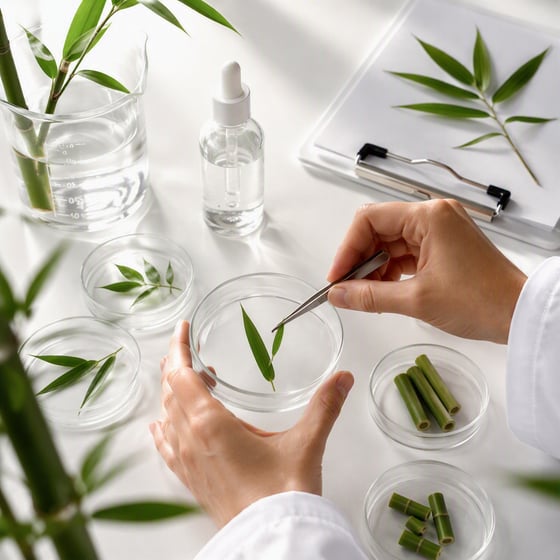
Silica exists in many forms. Colloidal silica, plant-derived silica from bamboo or horsetail, silica dioxide tablets. The challenge is that many of these forms polymerize (clump together into larger particles) before your body can absorb them. Once polymerized, silica becomes functionally inert for your collagen-building processes.
Concentrations higher than 2mM (approximately 120 mg/L) may lead to reduced solubility and low bioavailability. The molecular size and stability of the silica form determine whether it reaches your cells in a usable state.
Independent clinical trials conducted in the UK and Spain demonstrated that the stabilized monomethylsilanetriol (MMST) form used in LIVING SILICA® achieves a 64% absorption rate, compared to 5-20% for standard silica supplements.
What Makes a Vegan Collagen-Support Approach Different
Traditional collagen supplements rely on animal-derived collagen, typically bovine or marine sources. You consume the protein, your body dismantles it, and you hope the resulting amino acids end up where you want them.
A vegan collagen-support approach skips the animal collagen entirely. Instead of sending pre-formed collagen into a digestive system that will dismantle it anyway, you supply the mineral signal (bioavailable silica) that activates your own fibroblasts to produce collagen natively.
The collagen your fibroblasts produce is, in every measurable respect, superior to anything that arrives from an external supplement. It is made in context, by your own biology, for your own body. LIVING SILICA® Plant-Based Collagen Booster uses this principle, delivering stabilized silica from horsetail extract processed through the Heritage Concentrate proprietary method to eliminate thiaminase enzymes and preserve bioavailability.
How Adults Over 40 Can Evaluate Silica Supplements
Here are a few key points to help you evaluate a silica supplement for collagen support after 40:
1. Molecular form: Look for monomeric orthosilicic acid or stabilized MMST. These forms remain small enough for intestinal absorption. Plant silica from bamboo or horsetail alone may contain thiaminase and lower bioavailability unless specifically processed to remove it.
2. Absorption data: Ask whether the product has clinical absorption data. A formulation with a 64% absorption rate delivers meaningfully more silica to your fibroblasts than one absorbing at 5-15%.
3. Stability: Orthosilicic acid is inherently unstable and tends to polymerize over time. The formulation process should actively prevent polymerization to ensure what you take remains bioavailable months after production.
4. Synergistic nutrients: Silica works alongside vitamin C, zinc, and amino acids (glycine, proline) in collagen synthesis. A complete collagen-support protocol includes adequate intake of these cofactors through diet or supplementation.
What Clinical Research Shows About Silica and Skin After 40
A double-blind, placebo-controlled study examining women who supplemented with stabilized orthosilicic acid for 20 weeks showed measurable improvements in skin elasticity and texture (Barel et al., 2005, Archives of Dermatological Research).
A separate clinical trial conducted at the Federal University of Juiz de Fora in Brazil found that participants using LIVING SILICA® for 150 days experienced improvements in skin hydration, the appearance of fine lines, and nail hydration. The same study documented improvements in hair hydration, softness, and vitality.
A 2025 review published in Frontiers in Nutrition noted that collagen supplementation research increasingly points toward foundational mineral cofactors, including silica, as critical determinants of endogenous collagen quality rather than external collagen quantity alone.
How to Build a Daily Silica Protocol for Collagen Support
Adults over 40 looking to support their collagen production can follow a structured approach. The LIVING SILICA® 90-day protocol is designed to replenish silica stores progressively:
Weeks 1-4 (loading phase): Take a higher daily dose (30-60 mL) of liquid silica divided into two servings, 15 minutes before meals. Hold under the tongue briefly to improve absorption.
Weeks 5-12 (maintenance): Reduce to a standard daily serving (15 mL). Pair with vitamin C-rich foods and adequate protein intake to ensure your fibroblasts have all required building blocks.
Customers following this protocol typically report early signs of improvement in skin texture and nail strength within the first two to four weeks, with more pronounced results in hair density and joint comfort appearing by week eight to twelve.
In Conclusion: Supporting Collagen After 40 Starts with the Right Signal
Your body already knows how to make excellent collagen. It has been doing it your entire life. After 40, the question is not whether your biology can still produce collagen. It can. The question is whether your fibroblasts have the mineral signal, the tools, and the right environment to keep doing it well.
Bioavailable silica is a key part of that answer. Not because it replaces anything, but because it activates the system everything else depends on. LIVING SILICA® delivers the specific form your body can use, in a format designed for absorption, backed by clinical research, and formulated for adults who want their own collagen production working at its full potential.
FAQs About How Silica Helps Boost Collagen After 40
Does silica actually increase collagen production?
Yes. Orthosilicic acid directly upregulates collagen type I gene expression in fibroblasts. This is a documented mechanism confirmed in peer-reviewed research, not a vague nutritional claim. LIVING SILICA® delivers this form at a 64% absorption rate for measurable collagen-production support.
Is silica a replacement for collagen supplements?
Silica and collagen supplements work differently. Collagen peptides supply amino acids as raw materials. Silica activates your fibroblasts to assemble those materials into functional collagen. Many adults over 40 find that adding bioavailable silica to their routine complements or replaces external collagen intake.
How long does it take for silica to show results?
Most people following the LIVING SILICA® 90-day protocol notice early improvements in nail strength and skin texture within two to four weeks. Hair density and joint mobility improvements typically become noticeable between weeks eight and twelve of consistent daily use.
Can vegans support collagen production without animal products?
Absolutely. Since your body makes its own collagen from amino acids and mineral signals, you do not need to consume animal-derived collagen. LIVING SILICA® Plant-Based Collagen Booster delivers stabilized silica from horsetail extract, activating your fibroblasts without any animal ingredients.
What form of silica is most effective for collagen support?
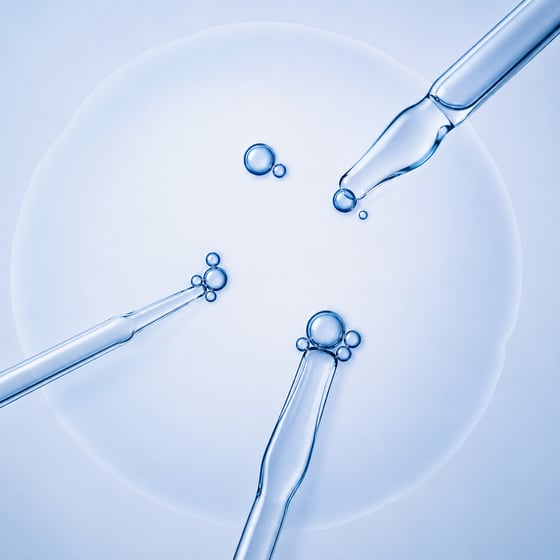
Monomeric orthosilicic acid and stabilized MMST are the most bioavailable forms. LIVING SILICA® uses a patented Heritage Concentrate process that prevents polymerization and maintains silica in its smallest, most absorbable state, achieving absorption rates significantly higher than colloidal or plant-extract alternatives.











.png?width=990&height=560&name=Dise%C3%B1o%20sin%20t%C3%ADtulo%20(79).png)
.png?width=990&height=560&name=Dise%C3%B1o%20sin%20t%C3%ADtulo%20(43).png)
.png?width=990&height=560&name=Dise%C3%B1o%20sin%20t%C3%ADtulo%20(34).png)
.png?width=990&height=560&name=Dise%C3%B1o%20sin%20t%C3%ADtulo%20(33).png)
.png?width=990&height=560&name=Dise%C3%B1o%20sin%20t%C3%ADtulo%20(27).png)
-1.png?width=990&height=560&name=Dise%C3%B1o%20sin%20t%C3%ADtulo%20(23)-1.png)


-1.png?width=990&height=560&name=Dise%C3%B1o%20sin%20t%C3%ADtulo%20(56)-1.png)










.png?width=990&height=560&name=The%20Most%20Effective%20Form%20of%20Silica%20(2).png)




.png?width=990&height=560&name=Designer%20(1).png)


.png?width=990&height=560&name=Dise%C3%B1o%20sin%20t%C3%ADtulo%20(6).png)
.png?width=990&height=560&name=Dise%C3%B1o%20sin%20t%C3%ADtulo%20(4).png)