
.png)
Why Silica Is the Upstream Trigger Behind Your Body's Own Collagen Production
When the conversation turns to youthful skin, strong joints, and resilient connective tissue, it almost always lands on one word: collagen. Supplement shelves are crowded with collagen peptides, collagen drinks, and collagen gummies, all promising restoration and renewal. But there is a problem with that story. It starts in the middle.
To truly understand how the body builds and maintains its structural integrity, we need to go further upstream, to the molecular switch that makes collagen production possible in the first place. That switch is silicon, and its biological form, silica, is one of the most underappreciated elements in human physiology.
The Premise: It Is Not About the Collagen
There is a significant difference between consuming collagen and producing collagen.
Collagen is the most abundant protein in the human body, making up approximately 30% of total protein mass. It is the architectural scaffold of skin, bone, cartilage, tendons, ligaments, and blood vessels. Without adequate collagen, these tissues lose density, flexibility, and function.
However, collagen is not a molecule the body can simply "receive" through supplementation and deploy directly. Dietary collagen undergoes extensive digestion before any of its components can be used. The body must be triggered to synthesize its own collagen, and that process requires a carefully orchestrated biological event. Silicon is central to that event.
What Is Silicon and Why Does It Matter?
Silicon (Si) is the second most abundant element on Earth's crust, and it is increasingly recognized as a biologically essential trace element. In the human body, it exists primarily in the form of orthosilicic acid (OSA), a small, water-soluble molecule that can cross biological barriers and interact directly with cells.
Silicon concentrations are highest in tissues that demand constant structural renewal: the aorta, trachea, tendons, bone, and the skin. Research has demonstrated that silicon plays a direct role in the regulation of collagen synthesis and the activation of the fibroblasts responsible for producing it.
This is not a passive relationship. Silicon is not simply "present" in connective tissue. It actively participates in the molecular machinery that builds it.
The Signal: How Silica Activates Collagen Synthesis
To understand silica's role, we need to think about collagen production as a manufacturing process requiring two things: a trigger and a substrate.
1. The Trigger: Fibroblast Activation. Fibroblasts are the specialized cells responsible for synthesizing collagen. They are present throughout connective tissue and capable of producing large quantities of structural proteins, but they require stimulation to do so. Silica has been shown in vitro studies to upregulate the expression of collagen type I gene transcription in human fibroblasts. In simpler terms: silica tells fibroblasts to turn on and get to work. This makes silica a genuine biological switch, an upstream signal that initiates the synthesis cascade.
2. The Substrate: Hydroxylation and Cross-Linking. Beyond its role as a signaling molecule, silica participates in the structural chemistry of collagen itself. Collagen's characteristic triple-helix structure depends on the hydroxylation of proline and lysine residues, a process facilitated by enzymes that require specific co-factors to function. Silica is involved in regulating the enzyme prolyl hydroxylase, which is essential for stabilizing the collagen triple helix.
Additionally, mature collagen fibers derive their mechanical strength from cross-linking, the formation of molecular bonds between adjacent collagen strands. This process is also influenced by silicon availability. In conditions of silicon deficiency, collagen cross-linking is impaired, and the resulting tissue is structurally weaker and more prone to degradation.
The Gap in the Supplement Industry
Most people take collagen supplements and hope for the best. But the question rarely asked is: what actually triggers the body to build collagen in the first place?
The body is not a passive recipient of nutrients. It is an active biosynthetic system that needs specific molecular inputs to perform. When silicon is deficient, collagen output slows, structural quality declines, and the downstream effects, accelerated skin aging, reduced joint resilience, weakened bone, accumulate visibly over time.
Silicon functions as a fibroblast activator and structural regulator. It governs the collagen production pipeline from the inside out.
Bioavailability: Not All Silicon Is Created Equal
An important nuance in the science of silica supplementation is the question of bioavailability. Silica exists in many forms, but not all are readily absorbed by the human body. Crystalline silica, the kind found in sand and rock, is biologically inert and potentially harmful when inhaled. Phytogenic silicon from plant sources varies significantly in its digestibility.
The most bioavailable form for human supplementation is orthosilicic acid (OSA), the same form found naturally in drinking water and certain plant foods. When stabilized, it demonstrates substantially higher absorption rates than silicon found in most dietary sources, making it the form most studied in clinical research and the most relevant for physiological impact.
In a clinical study, women who supplemented with stabilized orthosilicic acid for 20 weeks showed measurable improvements in skin elasticity and texture. Not because collagen arrived from outside, but because their own fibroblasts started producing more of it. (Barel et al., 2005, Archives of Dermatological Research.)
This distinction matters because the concentration of silica reaching target tissues determines whether the signaling cascade actually occurs. Sub-threshold levels may be insufficient to activate fibroblast response or support adequate cross-linking.
A Paradigm Worth Shifting
The collagen-centric view of structural health is not wrong, collagen is unquestionably essential. But it is incomplete. Focusing exclusively on collagen supplementation without addressing the upstream regulators of endogenous collagen synthesis is like investing in a factory while ignoring the power grid that keeps it running.
Silica is that power grid. It provides the signal, the enzymatic co-factors, and the structural chemistry needed to produce high-quality collagen, not from an exogenous source, but from the body's own sophisticated biosynthetic apparatus.
The body already knows how to build excellent collagen. Silicon ensures it has every reason, and every tool, to do so.
How LIVING SILICA® Supports Your Own Collagen Production
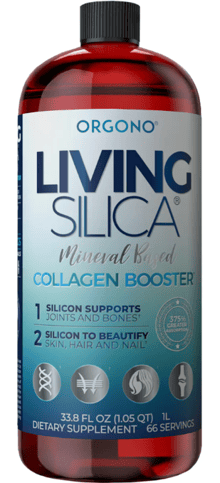
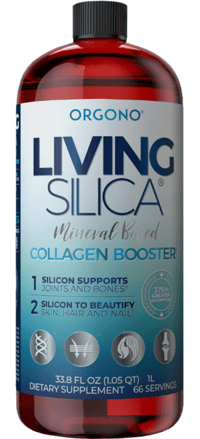
LIVING SILICA® Mineral-Based Collagen Booster delivers bioavailable silica using a patented Heritage Concentrate™ process that maintains silica in its smallest, most absorbable, monomeric form. Rather than adding collagen from external sources, it gives the body the mineral it needs to activate its own collagen production from within.
Customers following the 90-day protocol typically report early signs within the first two weeks, with nail growth often being the first visible indicator, followed by improvements in skin texture, skin elasticity, hair strength, and joint comfort over the following weeks.
100% vegan. Clinically backed. Refined over 30 years of research.
Frequently Asked Questions
Does silica really activate collagen production?
Yes. Clinical research has shown that orthosilicic acid, the bioavailable form of silica, upregulates collagen type I gene expression in human fibroblasts, the cells responsible for producing collagen in connective tissue.
Is silica better than taking a collagen supplement?
They work through different mechanisms. Collagen supplements add external protein the body must digest and redirect. Silica activates the body's own collagen production from within, in the right place, matched to the body's actual structural needs.
What is the best form of silica for collagen support?
The most bioavailable form is orthosilicic acid (OSA). When stabilized in liquid form, it is absorbed at significantly higher rates than crystalline silica or plant-extracted alternatives.
How long does it take to see results from silica?
Most customers following the 90-day protocol notice early changes within ten to fourteen days, with more significant improvements in skin, hair, and joint health becoming visible between thirty and ninety days of consistent use.
Can I take silica and collagen supplements together?
Yes. Silica and collagen supplements work through complementary mechanisms and can be combined safely.
These statements have not been evaluated by the Food and Drug Administration. This product is not intended to diagnose, treat, cure, or prevent any disease.

*Disclaimer: The statements in this article have not been evaluated by the Food and Drug Administration (FDA). Silica supplements are not intended to diagnose, treat, cure, or prevent any disease. Please consult with your healthcare professional before adding any new supplements to your routine.












.png?width=990&height=560&name=Dise%C3%B1o%20sin%20t%C3%ADtulo%20(79).png)
.png?width=990&height=560&name=Dise%C3%B1o%20sin%20t%C3%ADtulo%20(43).png)
.png?width=990&height=560&name=Dise%C3%B1o%20sin%20t%C3%ADtulo%20(34).png)
.png?width=990&height=560&name=Dise%C3%B1o%20sin%20t%C3%ADtulo%20(33).png)
.png?width=990&height=560&name=Dise%C3%B1o%20sin%20t%C3%ADtulo%20(27).png)
-1.png?width=990&height=560&name=Dise%C3%B1o%20sin%20t%C3%ADtulo%20(23)-1.png)



-1.png?width=990&height=560&name=Dise%C3%B1o%20sin%20t%C3%ADtulo%20(56)-1.png)












.png?width=990&height=560&name=The%20Most%20Effective%20Form%20of%20Silica%20(2).png)





.png?width=990&height=560&name=Designer%20(1).png)


.png?width=990&height=560&name=Dise%C3%B1o%20sin%20t%C3%ADtulo%20(6).png)
.png?width=990&height=560&name=Dise%C3%B1o%20sin%20t%C3%ADtulo%20(4).png)