
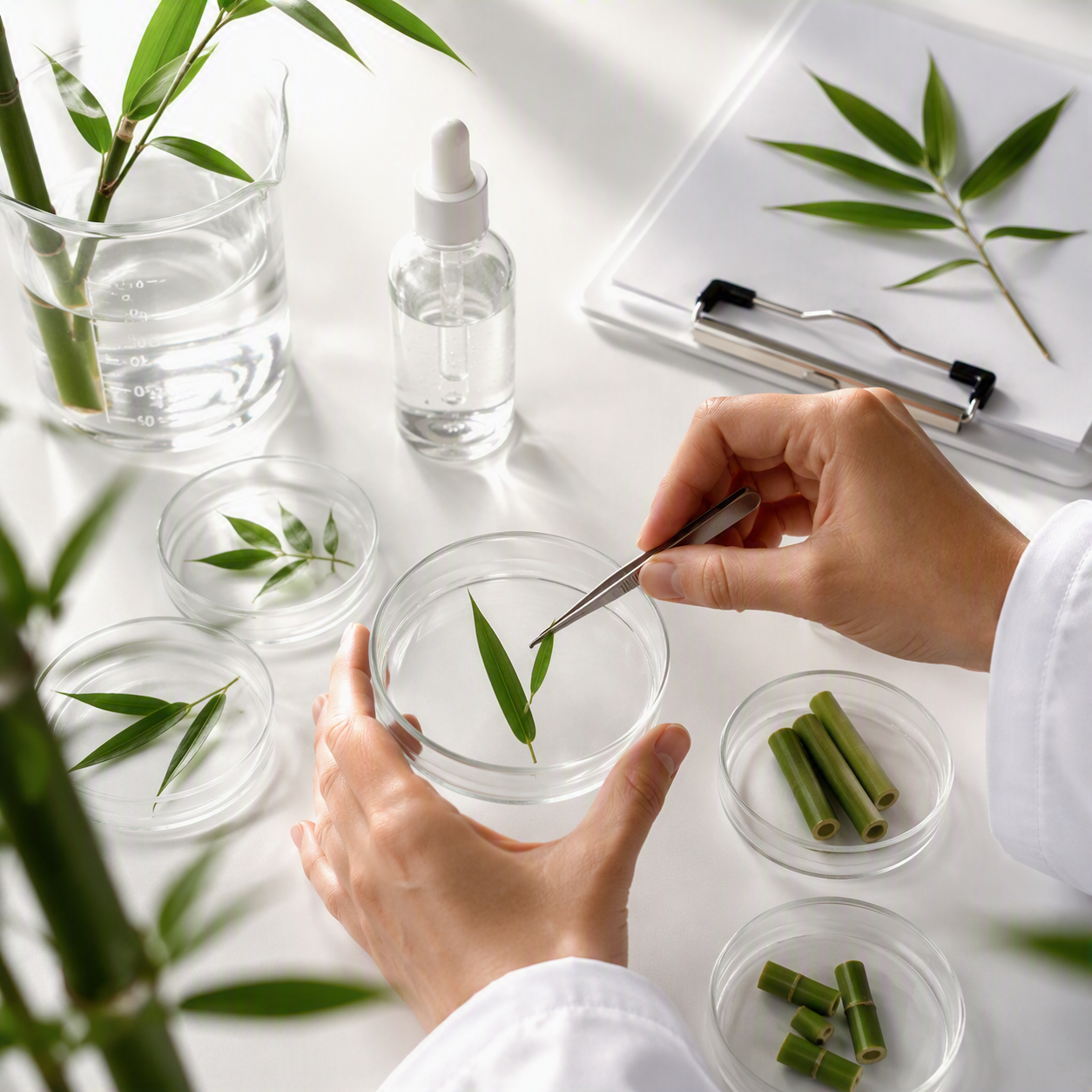
Why Plant-Based Collagen Appeals for Healthy Aging
Key Takeaways: Why Plant-Based Collagen Appeals for Healthy Aging
Plant-based collagen supplements do not contain collagen directly but activate the body's own collagen-producing pathways.
Fibroblasts require specific mineral signals, particularly bioavailable silica, to upregulate collagen gene expression as you age.
Vegan collagen alternatives appeal to people focused on ethical sourcing, sustainability, and clean-label ingredients.
LIVING SILICA® activates fibroblast collagen production at the gene level with a clinically documented 64% absorption rate.
Supporting collagen from the inside out addresses the root cause of age-related skin, hair, and joint changes.
What Are Plant-Based Collagen Supplements?
Collagen itself is an animal protein. It does not exist in plants. So when you hear the term "plant-based collagen supplement," what you are actually looking at is a formula designed to activate your body's own collagen production rather than deliver pre-formed collagen from an external source.
These formulas typically contain a combination of vitamins, minerals, and amino acid precursors. Vitamin C, zinc, copper, and silica are common ingredients because each plays a documented role in the collagen synthesis pathway.
The distinction matters. Instead of consuming collagen that your digestive system breaks apart before it can be used, a plant-based approach gives your fibroblasts (the cells whose entire job is to produce collagen) the raw materials they need to do their work.
Why Do Healthy Aging Consumers Choose Plant-Based Collagen?
The appeal goes beyond ethics, though ethical sourcing is certainly a driver. People focused on healthy aging often prioritize formulations they can verify, understand, and sustain over time.
Animal-derived collagen peptides are broken down completely during digestion. Your stomach does not distinguish between collagen from a bovine source and any other protein. It unravels the peptide chains and absorbs individual amino acids and small dipeptides.
This does not make animal-derived collagen worthless. It just means it works indirectly, as a general amino acid source rather than a targeted signal for collagen production. Plant-based alternatives that include bioavailable minerals can address the production signal directly.
How Does Your Body Actually Produce Collagen as You Age?
Your body already has cells whose entire job is to produce collagen. They are called fibroblasts, and they reside in the dermis layer of your skin, in your connective tissues, and in your joints.
Collagen synthesis follows a specific sequence. Fibroblasts need amino acids (glycine, proline, hydroxyproline), vitamin C as a cofactor, and structural minerals like silica to cross-link and stabilize the collagen triple helix.
As you age, fibroblast activity slows. Research published in the American Journal of Pathology (Varani et al., 2006) documented that chronologically aged skin shows decreased collagen production linked to reduced fibroblast function. The machinery is still there. What declines is the signal strength and the mineral environment that keeps it running.
What Role Does Silica Play in Collagen Production?
Silica, specifically in its bioavailable form as orthosilicic acid, activates fibroblast collagen synthesis at the gene level. This is not a vague nutritional effect. It is a targeted signal that upregulates collagen type I gene expression in human fibroblasts.
A study examining orthosilicic acid supplementation found that bioavailable silica directly stimulates procollagen type I production, the precursor molecule that assembles into mature collagen fibers in your skin and connective tissues.
The important nuance is that not all silica sources are equally bioavailable. Colloidal silica, silica dioxide, and plant-derived silica from horsetail or bamboo often have absorption rates between 5% and 20%. The molecular form and particle size determine whether silica actually reaches your fibroblasts or passes through your system unused.
Why Bioavailability Matters More Than Concentration
Concentration is not the sole determinant of an effective plant-based collagen supplement. What matters is how much of the active ingredient your body can use at the cellular level.
Orthosilicic acid molecules are small enough to be absorbed directly across intestinal membranes. Larger silica polymers, even at high concentrations, tend to polymerize in the digestive tract, reducing their bioavailability before they reach target tissues.
LIVING SILICA® addresses this through stabilized Monomethylsilanetriol (MMST), a patented form that resists polymerization and delivers silica with a clinically documented 64% absorption rate. That compares with typical silica supplements that achieve absorption between 5% and 20%.
How Plant-Based Collagen Supports Skin Elasticity and Firmness
When fibroblasts receive adequate silica signaling, they produce collagen that is structurally organized in its native environment. The collagen your fibroblasts produce is, in every measurable respect, better suited to your tissues because it is made in context, by your own biology, for your own body.
A randomized controlled trial (Proksch et al., 2014, Skin Pharmacology and Physiology) found statistically significant improvements in skin elasticity among women who supplemented with bioactive collagen-supporting nutrients over 8 weeks. Elderly women in the study showed measurable improvements at the 4-week mark.
For people focused on healthy aging, this approach aligns with a longer-term strategy: maintain the mineral foundation your body needs, and let your own fibroblasts handle the construction.
Does the Vegan Appeal Go Beyond Skin Health?
Collagen is not just a skin protein. It is the most abundant structural protein in your entire body, forming the scaffold of bones, tendons, cartilage, blood vessels, and the gut lining.
People choosing plant-based collagen alternatives for healthy aging often report interest in joint flexibility, bone density maintenance, and connective tissue recovery. Research has found associations between silica intake and bone mineral density, particularly in premenopausal women (Jugdaohsingh et al., 2004, Journal of Bone and Mineral Research).
While silica is not a replacement for clinical treatment of bone density conditions, it contributes to the broader nutritional environment that keeps structural tissues functioning well over decades.
How to Evaluate a Plant-Based Collagen Supplement for Aging
Here are a few key points to help you evaluate options:
1. Form of silica: Look for monomeric or stabilized forms (orthosilicic acid, MMST) rather than colloidal or plant-extracted silica. The molecular form determines bioavailability.
2. Absorption data: Choose formulas with published clinical absorption rates. A product listing silica content without absorption evidence may deliver far less than its label suggests.
3. Supporting cofactors: Vitamin C is essential for collagen cross-linking. Zinc and copper contribute to enzymatic steps in the synthesis pathway. A complete formula addresses multiple steps.
4. Clean formulation: Avoid products with artificial sweeteners, colorants, or unnecessary fillers. LIVING SILICA® Plant-Based Collagen Booster Powder is non-GMO, free from artificial additives, and 100% vegan.
What Does a 90-Day Plant-Based Collagen Protocol Look Like?
Collagen turnover is a slow biological process. Visible results from any collagen-support strategy require consistency over weeks, not days.
Customers following the LIVING SILICA® 90-day protocol typically report early changes in nail strength and hair texture in the first two to three weeks. Skin elasticity and hydration improvements tend to become noticeable between weeks four and eight.
This is a dimension that often gets overlooked. Collagen is a foundation protein, and rebuilding structural tissue takes time regardless of whether the source is animal-derived or plant-based. Consistency with a bioavailable formula is what separates measurable outcomes from short-term experimentation.
Where Holistic Wisdom and Clinical Research Converge on Plant-Based Collagen
What is striking about the current body of research on silica-based collagen support is how consistently it validates the foundational claims that integrative health practitioners have been making for decades.
Holistic nutritionists have long recommended mineral-rich foods and supplements for skin health and anti-aging. Where clinical science adds precision is in explaining the mechanisms, identifying the bioavailable forms that deliver results, and quantifying outcomes through controlled trials.
A review published in Dermatology Practical and Conceptual (Al-Atif, 2022) confirmed that collagen-supporting supplementation improves skin moisture, elasticity, and hydration, with no adverse effects reported across multiple randomized controlled trials. The research supports what many plant-based wellness practitioners have observed firsthand.
In Conclusion: A Smarter Approach to Collagen and Healthy Aging
Your body already knows how to make excellent collagen. It has been doing it your entire life. The question as you age is whether your fibroblasts have the signal, the tools, and the right mineral environment to keep doing it well.
Plant-based collagen supplements appeal to healthy aging consumers because they address that question directly. Rather than delivering pre-formed protein that must be broken apart and reassembled, they activate the system at its source.
LIVING SILICA® takes this approach further with stabilized, highly bioavailable silica backed by over 30 years of research. It is a small addition to a daily routine, but one that supports the foundation behind skin, hair, nails, joints, and connective tissues.
FAQs About Plant-Based Collagen for Healthy Aging
Do plant-based collagen supplements actually contain collagen?
No. Plant-based collagen supplements contain the precursors, cofactors, and mineral signals that activate your body's own collagen production. Since collagen is an animal protein, plant-based formulas focus on stimulating fibroblast activity rather than supplying pre-formed collagen.
How long does it take to see results from plant-based collagen?
Most people notice early changes in nail and hair strength in two to three weeks of consistent use. Skin elasticity and hydration improvements typically become visible between weeks four and eight. LIVING SILICA® recommends a 90-day protocol for measurable structural results.
Why is silica important for collagen production as you age?
Orthosilicic acid, the bioavailable form of silica, directly upregulates collagen type I gene expression in fibroblasts. As you age, your body's silica stores decline, reducing the signal that tells your collagen factories to stay active. Replenishing bioavailable silica addresses this gap.
What makes LIVING SILICA® different from other vegan collagen supplements?
LIVING SILICA® uses stabilized MMST (Monomethylsilanetriol), a patented form of bioavailable silica with a 64% absorption rate. Most plant-derived silica supplements achieve only 5% to 20% absorption. The proprietary Heritage Concentrate™ process ensures stability and consistent delivery.
Can plant-based collagen supplements help with joint health?
Yes. Collagen is a primary structural protein in cartilage, tendons, and ligaments. By activating collagen synthesis through bioavailable silica, plant-based formulas support joint flexibility and connective tissue integrity alongside skin health benefits.
Are plant-based collagen supplements safe for long-term use?
Clinical trials on silica-based collagen support have reported no adverse effects across study periods of 8 to 24 weeks. LIVING SILICA® formulas are clinically tested, free from common allergens, and designed for daily use as part of a sustained wellness protocol.












.png?width=990&height=560&name=Dise%C3%B1o%20sin%20t%C3%ADtulo%20(79).png)
.png?width=990&height=560&name=Dise%C3%B1o%20sin%20t%C3%ADtulo%20(43).png)
.png?width=990&height=560&name=Dise%C3%B1o%20sin%20t%C3%ADtulo%20(34).png)
.png?width=990&height=560&name=Dise%C3%B1o%20sin%20t%C3%ADtulo%20(33).png)
.png?width=990&height=560&name=Dise%C3%B1o%20sin%20t%C3%ADtulo%20(27).png)
-1.png?width=990&height=560&name=Dise%C3%B1o%20sin%20t%C3%ADtulo%20(23)-1.png)


-1.png?width=990&height=560&name=Dise%C3%B1o%20sin%20t%C3%ADtulo%20(56)-1.png)










.png?width=990&height=560&name=The%20Most%20Effective%20Form%20of%20Silica%20(2).png)




.png?width=990&height=560&name=Designer%20(1).png)


.png?width=990&height=560&name=Dise%C3%B1o%20sin%20t%C3%ADtulo%20(6).png)
.png?width=990&height=560&name=Dise%C3%B1o%20sin%20t%C3%ADtulo%20(4).png)