

Why Skin Elasticity Changes More Quickly After 40
Understanding What Really Drives Elasticity Loss in Midlife, and How to Support Your Skin's Structure Going Forward
Skin elasticity is the skin's ability to stretch and then return to its original shape. It comes mainly from elastin fibers, supported by the surrounding collagen network within the dermis, the deeper layer where the skin's structural "mesh" is built and maintained.
After 40, many people notice that the skin feels less firm and less springy than before. Several factors tend to converge around this stage of life: the body's collagen production gradually slows, elastin fibers accumulate wear, hormonal levels shift, and years of sun exposure and lifestyle factors add up. The pace and degree of these changes vary widely from person to person, influenced by genetics, environment, and daily choices.
Because these shifts happen in the dermis rather than only at the surface, topical firming products can feel less convincing over time. They act primarily on the outer layer, while much of the change is structural. To understand what you can realistically influence after 40, it helps to look at how the skin's architecture actually works.
Inside the Dermis: Collagen, Elastin, and the Skin's Scaffold
Beneath the surface, skin behaves more like an engineered fabric than a simple covering. Collagen provides tensile strength, the resistance to stretching or tearing, while elastin provides recoil, the snap-back response. Together with water-binding molecules such as hyaluronic acid, they form the extracellular matrix, or ECM.
Fibroblasts are the cells that build this matrix. They produce collagen, elastin, and the molecules that help the dermis hold water and stay plump. Research on skin aging describes how, over time, fibroblast activity tends to decline and the matrix they maintain becomes more fragmented and less organized.
The practical result is mechanical. When the collagen and elastin network is less organized, skin can sit looser at rest and take longer to recover after movement. Softer contours or fine lines may become more noticeable, though these visible changes usually reflect several factors at once rather than a single cause. Supporting the overall environment in which fibroblasts work becomes more relevant than simply adding moisture to the top layer.
Contributing Factors: Hormones, Glycation, and Oxidative Stress
After 40, several forces act on the skin's structure. Some are intrinsic, built into biology, and some are shaped by daily choices.
Hormonal change is one factor, and it is especially relevant for women. Estrogen helps support skin thickness and collagen content, and research on women around and after menopause associates the decline in estrogen with measurable reductions in dermal collagen and elasticity. The exact magnitude varies between individuals.
Glycation is a less visible process. Research describes how excess glucose can bind to structural proteins such as collagen and elastin, forming compounds that can make these proteins stiffer over time. This is mechanistic research, and individual outcomes vary; it is not a guarantee of a specific result from any single dietary pattern.
Oxidative stress, largely from UV exposure and pollution, generates reactive molecules that can damage cells and the surrounding matrix. Dermatology literature consistently identifies chronic sun exposure as a major external contributor to premature skin aging, which is one reason sun protection remains so important at every age.
Where Silica Fits In: Connective Tissue Support
Within this larger picture, trace minerals are easy to overlook. Silica, referred to as silicon in nutritional science, is one of the trace elements studied in relation to connective tissue.
Silica does not replace collagen, elastin, or hyaluronic acid, and it is not a treatment for any skin condition. Research explores its role as one of several nutritional cofactors involved in connective tissue, though the precise mechanisms are still being studied.
The most relevant clinical work looks at the specific bioavailable form of silicon that LIVING SILICA® is built on. In a randomized, double-blind, placebo-controlled study, Ferreira, Polonini and colleagues (2018) gave healthy volunteers 5 mg of elemental silicon per dose, delivered as a bioavailable form of silicon, twice daily over 150 days. Compared with placebo, the silicon group showed statistically significant improvements in facial wrinkles and UV spots, along with changes in skin texture.
Two points matter for interpreting this fairly. First, the study used the same bioavailable form of silicon behind the LIVING SILICA® formula, which makes this research directly relevant. Second, the findings apply to the studied population, dose, and duration, and should not be read as a promise of an individual result. Silica is best understood as one part of a broader approach that also includes protein intake, sun protection, and skincare, and it is complementary to, not a substitute for, collagen supplements or hydration strategies.
For a deeper look at how silica relates to fibroblasts and hydration.
Everyday Protocols to Support Skin After 40
You cannot reverse decades of structural change, but you can influence how your skin behaves going forward. The most useful approaches tend to be steady, realistic protocols rather than dramatic interventions.
-
Protect what remains. Daily broad-spectrum sun protection is one of the highest-impact choices available. Reducing new UV-related damage helps limit an ongoing source of collagen fragmentation.
-
Feed the matrix. Skin is protein-rich tissue. Adequate daily protein provides amino acids the body uses for collagen synthesis, and micronutrients such as vitamin C are involved in normal collagen formation. Individual protein needs vary, so specific targets are best discussed with a qualified healthcare professional.
-
Be mindful of sugar exposure. Balanced meals and limiting high-sugar, low-fiber foods are commonly recommended for general health and may help reduce glycation-related pressure on structural proteins over time. This reflects general context rather than a promised individual outcome.
-
Support circulation and movement. Regular physical activity supports blood flow to the skin, which helps deliver oxygen and nutrients as part of overall skin and body health.
-
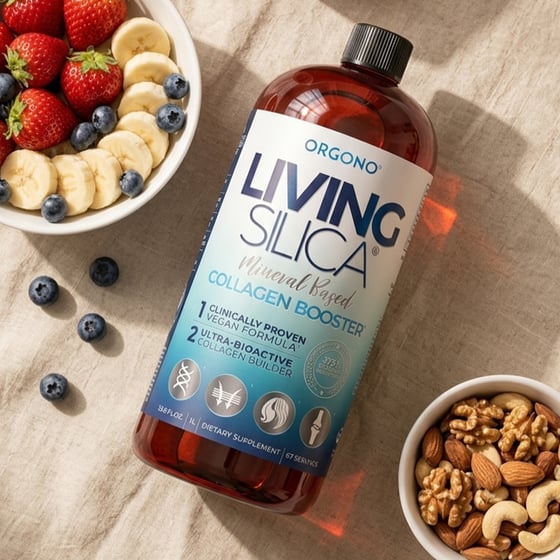
Consider inside-out support. For some people, a well-formulated collagen supplement, a bioavailable silica supplement, or both, under the guidance of a healthcare professional, can be part of supporting the internal environment skin depends on. LIVING SILICA® delivers silica as bioavailable, monomeric orthosilicic acid through its proprietary Heritage Concentrate™ process, formulated to prioritize absorbability.
-
Hydrate beyond the surface. Topical moisturizers help, but deeper hydration also depends on the dermal matrix.
The goal is not to freeze your appearance at a specific age. It is to support the underlying structure of your skin so that changes tend to unfold more gradually.
FAQs:
Does everyone lose skin elasticity after 40?
Some reduction in elasticity is a normal part of aging. Intrinsic aging, hormonal shifts, and cumulative sun and environmental exposure affect everyone to different degrees, and genetics influence how visible the changes become.
Does collagen production change with age?
Research indicates that collagen production tends to slow gradually with age and that existing collagen can become more fragmented over time. The exact rate varies between individuals.
Can silica restore skin elasticity on its own?
No. Silica is not a stand-alone solution or a treatment for any condition. It is studied as one of several nutritional cofactors related to connective tissue, and it works best as part of a broader approach that includes nutrition, sun protection, and skincare.
Is silica better than collagen supplements for skin?
They serve different purposes. Collagen supplements supply amino acids the body can use as raw material, while silica is studied for its role in supporting connective tissue. Many people view them as complementary rather than competing.
How long do clinical studies on silica typically run?
Clinical studies on connective-tissue nutrients, including the ch-OSA study above, often run for around 20 weeks, reflecting the time researchers allow for measurable changes. Study duration is not a promise of an individual result or timeline.
What is a realistic goal for skin after 40?
The realistic goal is to support healthier, more resilient skin going forward by addressing contributing factors such as sun exposure, nutrition, and overall skin care, rather than expecting to erase every sign of aging.
These statements have not been evaluated by the Food and Drug Administration. This product is not intended to diagnose, treat, cure, or prevent any disease.




















.png?width=990&height=560&name=Dise%C3%B1o%20sin%20t%C3%ADtulo%20(79).png)
.png?width=990&height=560&name=Dise%C3%B1o%20sin%20t%C3%ADtulo%20(43).png)
.png?width=990&height=560&name=Dise%C3%B1o%20sin%20t%C3%ADtulo%20(34).png)
.png?width=990&height=560&name=Dise%C3%B1o%20sin%20t%C3%ADtulo%20(33).png)
.png?width=990&height=560&name=Dise%C3%B1o%20sin%20t%C3%ADtulo%20(27).png)
-1.png?width=990&height=560&name=Dise%C3%B1o%20sin%20t%C3%ADtulo%20(23)-1.png)



-1.png?width=990&height=560&name=Dise%C3%B1o%20sin%20t%C3%ADtulo%20(56)-1.png)











.png?width=990&height=560&name=The%20Most%20Effective%20Form%20of%20Silica%20(2).png)