Silica vs Biotin for Hair: How Two Nutrients Compare
Understanding the keratin pathway, the collagen pathway, and why the form of a supplement matters
Biotin is the go-to recommendation for anyone thinking about hair. You will find it in nearly every "hair, skin, and nails" formula on the shelf, and if biotin levels are genuinely low, supplementation may help.
But biotin is only part of the picture. Hair does not emerge from keratin alone; it grows from collagen-rich tissue. That is where silica enters the conversation, through a different pathway entirely.
Key Takeaways
-
Biotin is a B vitamin involved in keratin-related metabolism, and deficiency is very rare in the United States.
-
Silica supports the body's natural collagen production and connective tissue.
-
The two work through different pathways and are complementary rather than interchangeable.
-
With silica, bioavailability depends on molecular form: monomeric silicon is readily absorbed, while other forms are decreasingly well absorbed with increasing polymerization.
-
What separates silica supplements is not the milligram count but the proprietary process behind keeping silicon in an absorbable state.
What Biotin Contributes
Biotin, or vitamin B7, is a water-soluble vitamin that helps the body convert food into energy and is involved in keratin-related metabolism.
The evidence is more measured than the marketing. The NIH Office of Dietary Supplements notes that biotin deficiency is very rare in the United States, that most people get enough from food, and that there is little scientific evidence supporting biotin supplements for improving hair, skin, and nail health.
Biotin status is also not easily confirmed, since serum biotin is not a reliable indicator of marginal deficiency. One practical note: high biotin intake can interfere with certain laboratory tests, so it is worth informing your healthcare provider before testing.
What Silica Contributes
Silica works through a different pathway. Rather than contributing to keratin, silica supports the body's natural collagen production and connective tissue.
The most relevant clinical work in hair examined a specific bioavailable form. In a randomized, double-blind, placebo-controlled study, Wickett et al. (2007) gave 48 women with fine hair either 10 mg of silicon per day or placebo, over nine months. The silica group showed a smaller decrease in elastic gradient and break load compared with placebo, and an increase in cross-sectional area.
How the Two Pathways Compare
| Feature | Silica | Biotin |
|---|---|---|
| What it is | Trace mineral | Vitamin B7 |
| Pathway | Supports the body's natural collagen production and connective tissue | Involved in keratin-related metabolism |
| Key variable | Molecular form and bioavailability | Whether an actual shortfall exists |
| Complementary | Yes | Yes |
Neither nutrient replaces the other. They address different aspects of the same system, which is why they are often found together in formulations for skin, hair & nails.
Why the Form of Silica Matters
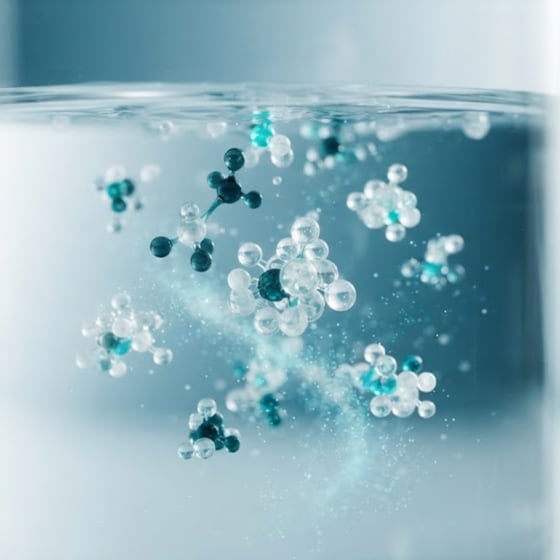
Not all silica behaves the same way. Silicon exists as soluble monomers, polymers, colloidal particles, and poorly soluble mineral structures.
The principle is straightforward: monomeric silicon is readily absorbed, while other forms are decreasingly well absorbed with increasing polymerization. This is why the total silica listed on a label tells you relatively little on its own.
The real question is not how much silicon a product contains, but what process keeps that silicon in a form the body can absorb.
Where LIVING SILICA® Fits In
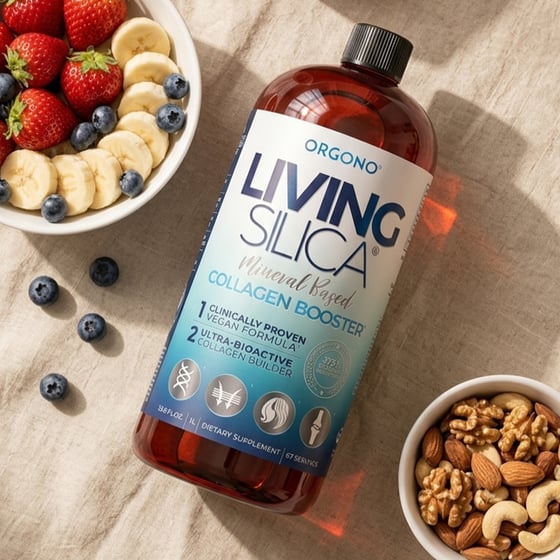
LIVING SILICA® is a heritage brand established in 1994, developed by Sc.D. Loïc Le Ribault, whose research produced a patented silicon formula after more than three decades of work.
That formula is produced through Heritage Concentrate, the exclusive proprietary process that enhances the solubility limit of silicon, maintaining it in a small, monomeric, and easily absorbed form. It is the process, not the raw mineral, that defines the difference.
LIVING SILICA® supports healthy skin, hair & nails and contributes to healthy bones & joints.
Learn more on the LIVING SILICA® science page.
Separate Note on the Published Research
The following study is presented as independent scientific literature on bioavailable silicon forms. It is not offered as substantiation for any specific LIVING SILICA® product.
Ferreira et al. (2018) evaluated two bioavailable silicon formulations at 5 mg of elemental silicon twice daily over 150 days. Compared with placebo, the silicon groups showed statistically significant differences in facial wrinkles and UV spots, along with changes in skin texture and eyelash length. The findings apply to those specific formulations, that population, dose, and duration. Source: Ferreira AO, Freire ES, Polonini HC, et al. Anti-Aging Effects of Monomethylsilanetriol and Maltodextrin-Stabilized Orthosilicic Acid on Nails, Skin and Hair. Cosmetics. 2018;5(3):41
Source: Ferreira AO, Freire ES, Polonini HC, et al. Anti-Aging Effects of Monomethylsilanetriol and Maltodextrin-Stabilized Orthosilicic Acid on Nails, Skin and Hair. Cosmetics. 2018;5(3):41
Considering Both Together
Silica and biotin act through different biological pathways, which is why they are commonly combined in formulations. As with any combination of supplements, it is best discussed with a qualified healthcare professional, particularly for anyone taking medication, managing a medical condition, or who is pregnant or breastfeeding.
In Conclusion
Biotin and silica are not competitors. Biotin is involved in keratin-related metabolism, and its value depends largely on whether an actual shortfall exists, something the NIH notes is uncommon in the United States. Silica supports the body's natural collagen production and the connective tissue beneath the surface.
For silica specifically, the decisive variable is the process that keeps silicon in a small, soluble, absorbable state.
FAQs
Is silica the same as biotin?
No. Biotin is a B vitamin and silica is a trace mineral. They work through different pathways.
Can I take silica and biotin together?
They act through different mechanisms and are commonly combined in formulations for skin, hair & nails. Discuss any new combination with a healthcare professional.
Does the form of silica matter?
Yes. Monomeric silicon is readily absorbed, while absorption decreases as silicon becomes more polymerized. The form is more informative than the total amount listed.
These statements have not been evaluated by the Food and Drug Administration. This product is not intended to diagnose, treat, cure, or prevent any disease.


















.png?width=990&height=560&name=Dise%C3%B1o%20sin%20t%C3%ADtulo%20(79).png)
.png?width=990&height=560&name=Dise%C3%B1o%20sin%20t%C3%ADtulo%20(43).png)
.png?width=990&height=560&name=Dise%C3%B1o%20sin%20t%C3%ADtulo%20(34).png)
.png?width=990&height=560&name=Dise%C3%B1o%20sin%20t%C3%ADtulo%20(33).png)
.png?width=990&height=560&name=Dise%C3%B1o%20sin%20t%C3%ADtulo%20(27).png)
-1.png?width=990&height=560&name=Dise%C3%B1o%20sin%20t%C3%ADtulo%20(23)-1.png)


-1.png?width=990&height=560&name=Dise%C3%B1o%20sin%20t%C3%ADtulo%20(56)-1.png)