Look beyond the milligrams. The best bone and joint supplements use a form your body can absorb, support your own collagen production, show clinical evidence with clear study details, and are made under verified quality standards. Since connective tissue renews slowly, give any supplement at least 90 days before judging results.
Most bone and joint supplements promise the same thing: stronger bones, healthier cartilage, less stiffness. But the ingredient label rarely tells you whether your body can actually absorb what is inside. If you are over 40, your natural collagen production is already declining, which means the right bone and joint health supplements matter more than ever.
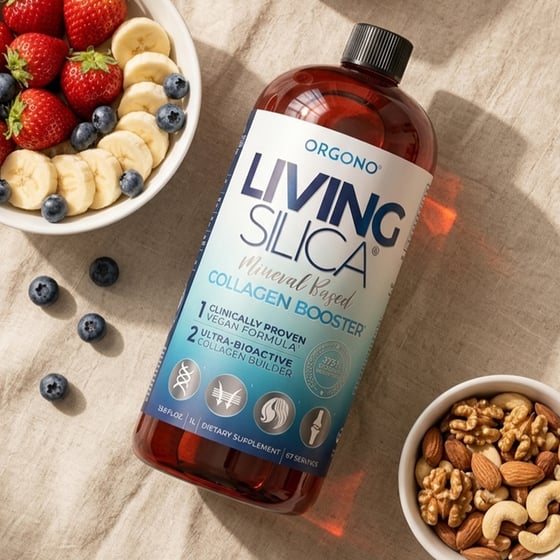
LIVING SILICA® approaches this challenge differently. Rather than adding external collagen, it provides the bioavailable mineral your body needs to support its own collagen production from within. That distinction matters when you are evaluating what to take next.
This article walks through seven evidence-based criteria that separate effective bone and joint supplements from the rest of the shelf.
Key Takeaways: Bone and Joint Supplements
-
Bioavailability determines whether a supplement's active ingredients reach your bones and joints effectively.
-
Collagen support works from within when the body receives the right mineral signals to produce its own.
-
Third-party testing and clinical backing separate reliable supplements from unverified options on the shelf.
-
LIVING SILICA® delivers silica in a bioavailable, water-soluble form designed for absorption.
-
A structured protocol of at least 90 days allows connective tissue enough time to renew and respond.
Choosing Bone and Joint Supplements That Work
1. Prioritize Bioavailability Over Ingredient Volume
A supplement can list dozens of nutrients and still deliver very little where it counts. Bioavailability measures how much of an active ingredient your body absorbs and uses after ingestion.
For bone and joint formulas, this is critical. Colloidal silica, for example, is absorbed at much lower rates than water-soluble forms of silica. When comparing labels, look for the specific chemical form of each ingredient, not just the milligram count.
2. Understand How Collagen Support Actually Functions
Many supplements contain hydrolyzed collagen peptides. Your digestive system breaks these down into amino acids that enter a shared metabolic pool, providing raw material your body can use for many purposes, including your joints or bones.
A complementary approach is to support the cells responsible for making collagen in the first place. Fibroblasts and osteoblasts rely on specific mineral signals to form collagen types I and III. Providing those signals may support the body's own structural maintenance processes, working alongside the raw material rather than replacing it.
3. Look for Clinical Evidence, Not Marketing Claims
Phrases like "clinically proven" appear on many labels, yet the studies behind them vary widely in rigor, scope, and relevance. Look for randomized, placebo-controlled trials with clearly stated participant counts, dosages, and durations.
For bone health specifically, research from Spector et al. (published in BMC Musculoskeletal Disorders) showed that supplementation with a bioavailable form of silicon, alongside calcium and vitamin D3, stimulated markers of bone formation in osteopenic women over 12 months. That study did not use LIVING SILICA®, but it shows the kind of methodological transparency a credible supplement should offer.
4. Check Whether the Formula Addresses Both Bone and Joint Tissue
Bone supplements often focus on calcium and vitamin D alone. Joint supplements tend to lean on glucosamine and chondroitin. Rarely do they address the shared connective tissue infrastructure that supports both of these systems together.
Collagen makes up roughly 90% of the organic matrix of bone and a significant proportion of cartilage. A supplement that supports collagen production at a foundational level may benefit both bone and joint tissue rather than targeting one system at the expense of the other.
5. Evaluate the Role of Silica in Structural Wellness
Silica is a trace mineral that has been suggested to play a role in collagen formation, including the enzymatic steps that help collagen build the triple-helix structure it needs for structural strength.
LIVING SILICA® provides this mineral in a bioavailable, water-soluble form. The patented Heritage Concentrate™ process keeps silica small enough for your body to absorb. This supports bone and joint health through the body's own biological pathways.
6. Consider Third-Party Testing and Regulatory Transparency
The supplement industry operates with limited pre-market oversight from regulators. That reality makes third-party verification an especially important quality signal. Look for supplements that follow GMP (Good Manufacturing Practices) and share independent laboratory testing results.
Transparency about sourcing, manufacturing processes, and clinical backing gives you a clearer picture of what you are putting into your body. Brands that publish full study parameters rather than selectively chosen data points tend to be more trustworthy.
7. Commit to a Structured Protocol of at Least 90 Days
Connective tissue renews slowly. Bone turnover cycles can take three to six months to complete. Joint cartilage renewal follows a similar extended timeline. A two-week trial is rarely long enough to evaluate whether a bone and joint supplement is doing its job.
Following a structured 90-day protocol gives your body sufficient time to integrate the nutrients and respond. Consistency across the full cycle is what makes changes easier to notice.
How to Build a Smarter Bone and Joint Supplement Routine
The supplement aisle can overwhelm you with options. Focus on what the science supports: bioavailable ingredients, clinical evidence, and formulations that work with your body's own processes.
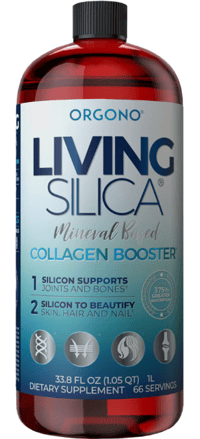
LIVING SILICA® gives your body the mineral foundation it needs to produce its own collagen for bone and joint support. Refined over 30 years of research, it offers a science-backed approach to structural wellness that starts from within.
If you are ready to rethink how you support your bones and joints after 40, explore LIVING SILICA® Mineral-Based and begin a protocol built around what your body actually needs.
FAQs About Bone and Joint Supplements
Why does bioavailability matter in bone and joint supplements?
Bioavailability determines how much of a nutrient your body actually absorbs. A supplement with low bioavailability delivers fewer active compounds to your bones and joints, reducing its effectiveness regardless of the dose listed on the label.
How is silica different from collagen in supporting joint health?
Collagen supplements provide amino acids, the raw material your body can use for many purposes. Silica supports the body's own collagen production. LIVING SILICA® helps your body build its own collagen and can complement a collagen routine.
What should I look for on a supplement label for bone health?
Check for the specific chemical form of each active ingredient, not just the milligram amount. Look for clinical trial references, quality signals like GMP compliance and independent lab testing, and clear information about bioavailability and sourcing.
How long should I take a bone and joint supplement before expecting results?
Connective tissue renews over weeks and months, not days. Most clinical studies run for 12 weeks or longer. A structured 90-day protocol is a reasonable baseline for evaluating whether a supplement supports your bone and joint health goals.
Can a single supplement support both bone density and joint comfort?
It depends on the formulation. Supplements that support collagen production at a foundational level may benefit both systems, since collagen is a shared structural component of bone, cartilage, and connective tissue throughout the body.
Is plant-based silica as effective as mineral-based silica for bones and joints?
Effectiveness depends on the form of silica and its bioavailability. LIVING SILICA® offers both mineral-based and plant-based formulas, each delivering a bioavailable form of silica to support collagen production for your bones and joints.