How do you read a silica supplement label?
To read a silica supplement label, check four things: how the amount is listed (as silica or as elemental silicon), where the silica comes from, what form it is in, and whether it is an active ingredient or only appears under "other ingredients." Form matters most, because research shows absorption can vary widely depending on the source (Sripanyakorn et al., 2009).
If you have ever done a silica supplement comparison, you know how confusing it can be. One label says silica, another says silicon. One lists horsetail, another bamboo, another silicon dioxide. The numbers do not match, the serving sizes are different, and it is hard to tell whether two products are built in the same way.
They can differ in important ways. Here is a step-by-step guide to reading a silica label with confidence, and to finding the best form of silica supplement for your needs.
Step 1: Understand silica vs. silicon
These two words are closely related, but they are not interchangeable:
-
Silicon (Si) is the mineral element itself.
-
Silica is the everyday name for compounds of silicon and oxygen. In nature, it is mostly found as silicon dioxide (SiO₂) in sand, quartz and many plants, but it can also exist in water-soluble forms.
On supplement labels, "silica" is used as an umbrella term for ingredients that provide silicon, so the same word can describe very different materials. That is why it helps to look at the ingredient name and its form, not just the headline.
It also helps to check how the amount is expressed. Some labels list the amount of silica (as SiO₂), others the amount of elemental silicon (as Si). Silicon makes up only about 47% of silicon dioxide by weight, so numbers expressed in the two ways cannot be compared directly.
Step 2: Identify the source
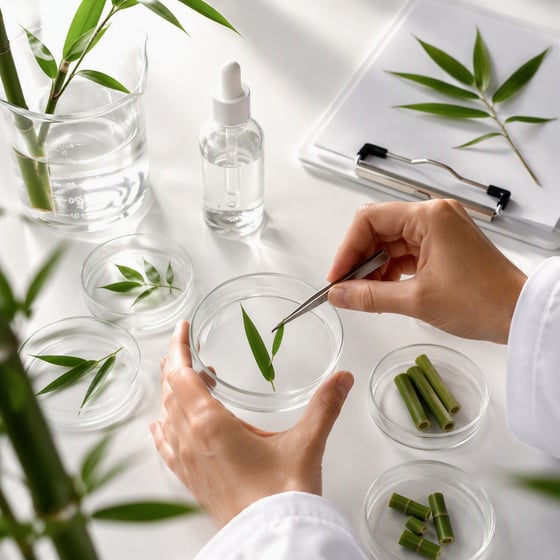
The source is where the silicon comes from. Plant-Based products may start from plants such as horsetail or bamboo, and Mineral-Based products from minerals such as quartz.
The source tells you the origin of the silicon. It does not tell you what your body actually receives, because that depends on how the silicon is processed and stabilized.
Curious where silica comes from? Read [Where do we get silica from?].
Step 3: Check the form of silicon
The form is the chemical state the silicon is in: how small the particles are, how it is stabilized and how well it dissolves. This is where the biggest differences appear.
In a study published in 2009, researchers measured how much silicon was absorbed from eight different sources: foods, a beverage, supplements and an antacid. Healthy volunteers took each source in a fasted state, and absorption was estimated from the silicon excreted in urine. Absorption ranged from about 1% to 64% of the dose depending on the source. The authors found that small, monomeric forms were readily absorbed, while particulate forms were absorbed less and less as they became more polymerized (Sripanyakorn et al., 2009).
This study had limits. Each source was tested in small groups of volunteers, in a single fasted dose, and absorption was estimated indirectly from urine. It also did not include LIVING SILICA®. What it shows is why the form of silicon matters, not how any specific product performs.
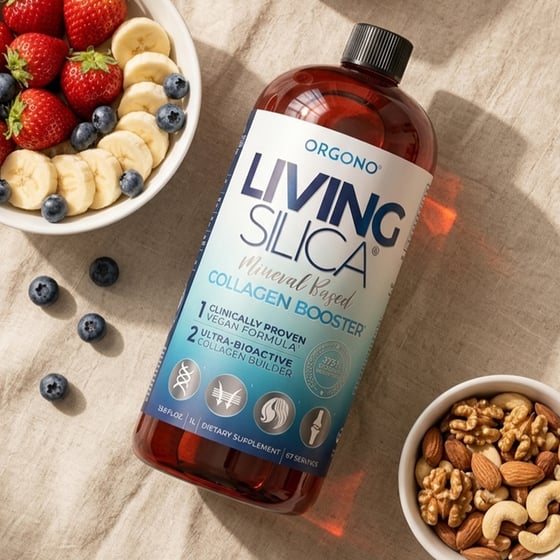
How LIVING SILICA® approaches form LIVING SILICA® is a US-patented silicon formula, developed by Sc.D. Loïc Le Ribault and available since 1994. It is made with Heritage Concentrate™, the proprietary process used across all LIVING SILICA® products. Heritage Concentrate™ raises the solubility limit of silicon and keeps it in a small, monomeric, easily absorbed form for intestinal absorption.
Learn more about the most absorbable form of silica.
Want to go deeper? Read Absorbable Silica vs. Unabsorbable Silica.
Step 4: Compare the amount, the serving and the directions
Once you know the form, the amount per serving becomes meaningful. Look for the amount of elemental silicon per serving, when it is listed, and check:
-
The serving size and the number of servings per day.
-
The directions for use and storage.
-
The format. Silica supplements come as liquids, capsules and powders. The format is one part of the picture, but it does not replace information about the form of silicon inside.
Step 5: Read the "other ingredients" section
This is a common source of confusion. Silicon dioxide is a chemical name. "Flow agent" or "anticaking agent" is a job it can do in a formula.
In the US, silicon dioxide is permitted in food as an anticaking agent, in amounts not exceeding 2% of the food by weight (21 CFR 172.480). That is why it appears in the "other ingredients" list of many powders and capsules, including products that have nothing to do with silica supplementation.
When silicon dioxide appears only in "other ingredients," it is typically there for that function and is not the silicon source the product is built around.
Step 6: Look for quality signals
These are general signals worth looking for on any supplement label:
-
A statement that it is manufactured in a GMP facility.
-
Clear, transparent labeling of ingredients and amounts.
-
Directions for use and storage.
-
Dietary information that matters to you, such as vegan, gluten-free or GMO-free.
Your silica label checklist
|
Question |
What to look for |
|---|---|
|
Does it list silica or silicon? |
The ingredient name, and whether the amount is expressed as Si or as SiO₂ |
|
What is the source? |
Plant-Based or Mineral-Based origin |
|
What form is the silicon in? |
Information on the form, how it is processed and any available studies |
|
What is the amount and serving? |
Elemental silicon per serving, serving size, directions |
|
Where does silicon dioxide appear? |
Active ingredient vs. "other ingredients" flow agent |
|
What quality signals are listed? |
GMP facility, transparent labeling, clear directions |
Frequently asked questions
What is the best form of silica supplement?
Research suggests absorption depends heavily on the form of silicon. In one study, small monomeric forms were readily absorbed, while larger particulate forms were absorbed less as they became more polymerized. When comparing supplements, look at the form of silicon and how the product is made, not only the amount.
What does "most absorbable silica" mean?
There is no standard definition on labels, so it helps to look for specifics: the form of silicon, how it is processed and any studies behind the product. LIVING SILICA® is made with Heritage Concentrate™, which keeps silicon in a small, monomeric, easily absorbed form.
Why is there silicon dioxide in my supplement?
Silicon dioxide is commonly used as an anticaking or flow agent in powders and capsules. When it is listed under "other ingredients," it is typically there for that function.
Is silica in capsules different from liquid silica?
The format is one part of the picture. The label should also tell you the form of silicon inside the product.
Why do silica supplements show such different numbers?
Some labels list silica (as SiO₂) and others list elemental silicon (as Si). Because silicon dioxide also contains oxygen, the numbers are not directly comparable.
The bottom line
The number on the front of a silica label tells only part of the story. Understanding silica vs. silicon, the source and the form of silicon helps you compare products with confidence. LIVING SILICA® is made with Heritage Concentrate™, and it supports healthy skin, hair & nails and contributes to healthy bones & joints.
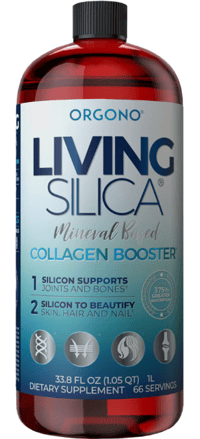
Discover LIVING SILICA® MINERAL-BASED COLLAGEN BOOSTER, made with Heritage Concentrate™
Looking for hair support? Read Hair Shedding After 30.
References
-
Sripanyakorn S, Jugdaohsingh R, Dissayabutr W, Anderson SHC, Thompson RPH, Powell JJ. The comparative absorption of silicon from different foods and food supplements. Br J Nutr. 2009;102(6):825-834. doi:10.1017/S0007114509311757 [pmc.ncbi.nlm.nih.gov]
-
U.S. Code of Federal Regulations, Title 21, § 172.480, Silicon dioxide
†These statements have not been evaluated by the Food and Drug Administration (FDA). This product is not intended to diagnose, treat, cure, or prevent any disease.